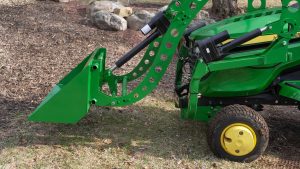


If you’ve ever looked at your weekend to-do list—mulch piles, driveway ruts, an unexpected brush mess—and thought, “There has to be a faster way,” this guide is for you. This practical resource from LGMUSA (US) breaks down the world of front end loader attachments so you can choose tools that save time, protect your lawn, and stretch your budget.
We focus on real-world choices for homeowners and acreage owners, especially people running garden tractor front end loader attachments. Whether you’re behind a compact machine or working with a garden tractor front end loader, we’ll walk you through choosing the right bucket style, understanding quick-attach options, and knowing exactly when an upgrade will make your work easier.
Clear, usable guidance you can put into practice this weekend.
A loader bucket looks simple, a steel scoop on the front, but the bucket you choose determines:
Choosing the right bucket style for your material, your surface, and your machine is the difference between “done already?” and “why is this taking all day?”
Keep three questions in mind:
If you answer those honestly, your ideal bucket becomes obvious.
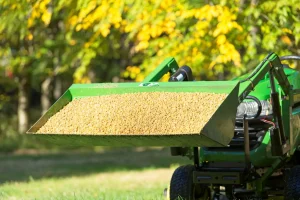
Best for: everyday jobs—mulch, compost, topsoil, light gravel, snow pushes.
Why it works: balanced capacity, good visibility, predictable control.
Where it struggles: prying rocks or hardpan; it’s built to carry, not dig.
Ideal for: most American homeowners using garden tractor front end loader attachments.
Best for: mulch, leaves, chips, fluffy snow.
Why it works: tall sides and a deeper profile allow bigger loads without hitting lift limits on light materials.
Where it struggles: dense materials like wet soil or stone.
Pro tip: perfect for annual mulch season.
Best for: soil work, compacted clay, small stone, occasional prying.
Why it works: stronger corners, thicker plate, reinforced cutting edge.
Tradeoff: heavier—eats into lift capacity.
What it is: a removable bar of teeth that bolts or clamps onto the bucket edge.
Best for: breaking crusty soil, roots, or stubborn piles.
Tradeoff: leaves chatter marks—remove for finish grading.
Best for: gravel driveways, soil work, consistent finish quality.
Bonus: protects the bucket edge; replacements are simple.
Best for: moving large amounts of powder snow fast.
Tradeoff: packed snow or ice requires traction aids.
Best for: sorting rock from soil, pasture cleanup, trail maintenance.
Tradeoff: fines fall through—by design.
Best for: versatility—scooping, clamping, pushing, back-blading
Tradeoff: heavy and complex; often too much for garden tractor loaders.
Bigger isn’t always better. Oversized buckets spill more and can make steering unpredictable.
A smart rule for homeowner machines:
If you work tight beds, go narrower. If you maintain driveways, match tire width.
Small choices, big difference in finish quality.
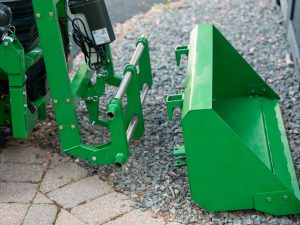
A quick-attach system determines how quickly you can swap front end loader attachments.
Pin-On
Light, rigid, affordable—just slow to swap.
Proprietary Garden Tractor QA
Fast, lightweight, easy for one person. Smaller ecosystem, but perfect for garden tractor front end loader attachments.
Skid-Steer QA (SSQA)
Huge attachment marketplace—great for larger machines. Too heavy for garden-tractor setups.
Rule of thumb: For garden tractors, use a lightweight proprietary QA. For compact tractors, SSQA is king.
Upgrade when:
Skip the upgrade if you’re finishing projects on time and your surfaces look good. No need to fix what already works.
Capacity is a balance of three things:
Choose volume based on the heaviest thing you regularly move.
Use a GP/HD bucket with a smooth or bolt-on edge. Back-drag short passes. Skid shoes help.
Light-material bucket shines here. Protect borders with boards.
GP bucket + tooth bar for gripping and lifting.
Tooth bar for breaking, smooth edge for finishing.
Ask yourself:
If yes, a QA system is worth it.
This keeps spending efficient.
Fifteen minutes of care protects thousands of dollars in equipment.
Pro Tips You’ll Actually Use
Upgrade Roadmap
Spring: GP bucket, smooth edge, tooth bar for new beds
Summer: GP or light-material; QA helps with frequent swaps
Fall: GP + tooth bar; lower tire pressure for traction
Winter: Light-material bucket or pusher; chains and ballast recommended
Before a big job
After the job
You don’t need a shed full of attachments to get professional results. Start with a well-chosen GP bucket, add one smart accessory to solve your biggest issue, and make swapping tools painless with a quick-attach. Pair that with good ballast practices and calm, overlapping passes, and your front end loader becomes a quiet, reliable force on turf, gravel, or snow.
If you want help dialing in your exact chores and property, reach out to LGMUSA. Tell us what you move, where you move it, and what frustrates you, and we’ll help you choose buckets, quick-attach systems, and practical upgrades that respect your yard, your budget, and your weekend.

© 2026 All Rights Reserved | LGM USA LLC
Added to cart
Check out our shop to see what's available