
You can transform a capable lawn or garden tractor into a versatile workhorse without spending $20,000 on a sub-compact tractor by adding the right attachments and upgrades. Front-end loaders, dump carts, box blades, tillers, aerators, snow blades, pallet forks, sweepers, spreaders, and rollers can significantly expand your machine’s capabilities for property maintenance. However, understanding your tractor’s transaxle, axle, steering, tire, and weight limits is essential to ensure safe and reliable operation.
If you are tired of pushing a wheelbarrow until your shoulders ache, you have probably looked at compact tractors online. You also probably choked at the price tag. The reality is you don’t need a twenty-thousand-dollar diesel rig to get real work done.
Getting actual utility out of your standard mower boils down to three straightforward upgrades. First, add a front material handler like a scoop bucket. Next, bolt on a heavy-duty rear hitch for ground tools. Finally, balance the chassis with 150 pounds of rear suitcase weights so you don’t snap your front spindles.
These modifications take a machine designed strictly to cut grass and turn it into a dedicated workhorse.
Nobody wants to drop $20,000 on a sub-compact diesel just to manage a property out. It makes zero financial sense for a machine that sits in a shed three weeks out of the month. You can execute some serious lawn tractor utility upgrades for a fraction of that cost. You save garage space, eliminate diesel engine maintenance, and avoid tearing up your lawn with a heavy piece of equipment.
The secret to pulling this off is respecting mechanical limits. There is a huge difference between a basic riding mower and a garden tractor, and it comes down to the transaxle.
A standard Tuff Torq K46 transmission found in most big-box store mowers cuts grass beautifully. It handles flat ground and pulls light carts without breaking a sweat. But trying to rip up compacted clay? That requires the heavier K66, K72, or Hydro-Gear G730 transaxles found in true garden tractors. If you understand what your specific transaxle can handle, you can confidently bolt on heavy steel without frying your hydrostatic pump.
When researching tractor attachments for property maintenance, you need steel that actually lasts. Skip the flimsy plastic aftermarket add-ons and focus on these ten heavy-duty tools.
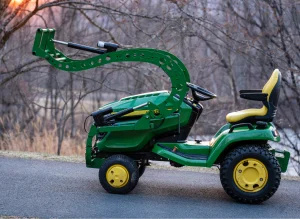
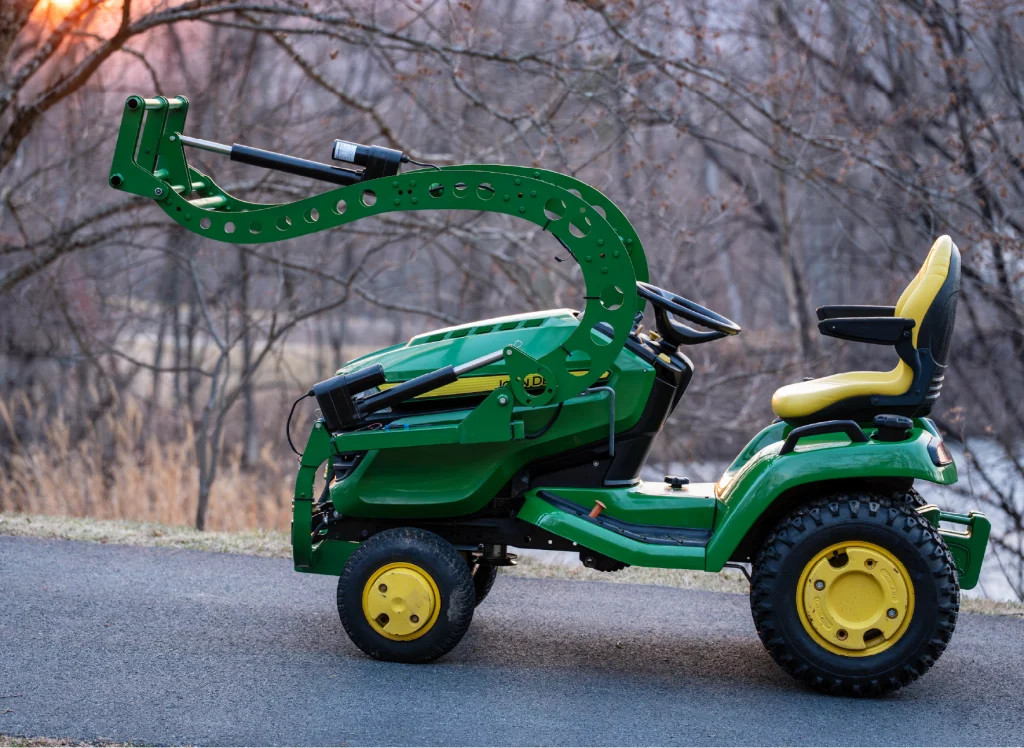
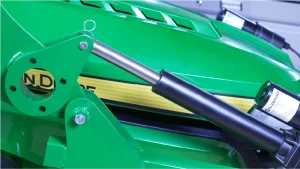
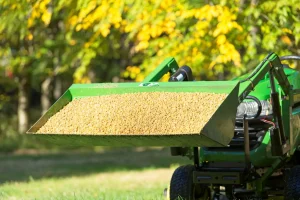
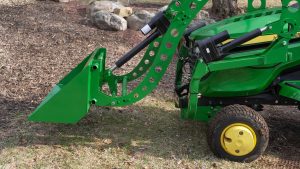
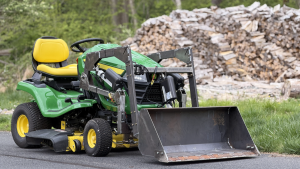
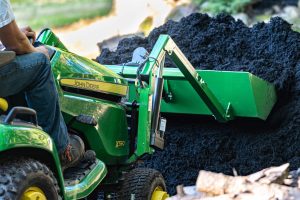
Moving bulk materials is exhausting. Bolt-on front-end loader attachments let you scoop, lift, transport, and dump heavy materials effortlessly. Instead of relying on a complicated mess of hydraulic pumps and leaky fluid reservoirs, modern residential setups use reliable 12V electric actuators. They wire directly into your electrical system, giving you 200 to 400 pounds of lifting capacity with zero fluid maintenance.
A cheap plastic wagon will not survive a load of split oak firewood. When looking at basic lawn mower attachments, a heavy-duty dump cart is non-negotiable. You want a 16-gauge welded steel cart that holds over 1,000 pounds. The trick is finding one that swivels 180 degrees. When you back up to a retaining wall, a foot-pedal swivel cart lets you dump the payload exactly where you want it without making turf-tearing turns.
Grading a gravel driveway requires serious downforce. You cannot just drag a flat piece of metal behind the mower. You need a box blade with steel scarifier teeth to break up the hardpan. A sleeve hitch allows you to apply mechanical downward pressure, forcing the blade deep into the dirt. This allows you to run serious garden tractor attachments safely.
Breaking new ground by hand will ruin your weekend. Self-powered tow-behind tillers solve this completely. Unlike smaller tillers that rely on your mower’s PTO belt, a self-powered tiller has its own dedicated gas engine. It runs counter-rotating tines that tear through established sod effortlessly. You simply tow it at a slow, steady pace.
Spike aerators are garbage. Pushing a solid steel spike into the ground just compacts the dirt laterally, making drainage problems worse. You need hollow tines that pull actual 3-inch dirt plugs out of the ground. Look for a core aerator with a heavy steel weight tray, and strap 150 pounds of concrete blocks to it for maximum soil penetration.
Pushing a foot of wet snow is remarkably easy with the right setup, making a front blade one of the most popular residential tractor attachments on the market. The key is a heavy-duty trip-spring mechanism. If you hit a raised concrete expansion joint, the blade springs forward, absorbing the shock instead of transferring that violent impact straight into your steering frame.
Pallet forks are not just for warehouses. For property owners, a small set of Category 0 forks is perfect for dragging fallen logs or moving stacked bags of potting soil. The golden rule is center-of-gravity management. Keep the load low to the ground. Raising a heavy load too high overstresses your front axle spindles and makes the tractor dangerously tippy.
Raking three acres of fall leaves by hand is impossible. A high-volume tow-behind sweeper picks up wet leaves, pine needles, and heavy grass clippings incredibly fast. Because the sweeper’s brushes are driven by the rotation of its own wheels, it completely bypasses your PTO system. It is one of the most efficient landscaping tractor attachments for sheer time-saving value.
Spreading winter rock salt and fertilizer will eat cheap gears alive. The fine powder gets into the mechanisms, absorbs moisture, and creates rust almost overnight. Skip the entry-level plastic spreaders. Look for a unit with enclosed commercial gearboxes. This keeps corrosive materials out of the drive gears so they don’t seize up mid-job.
Spring frost heaves can turn a smooth lawn into a minefield. A heavy roller flattens things out quickly, but you have to manage the payload. Most heavy-duty rollers are filled with water to reach maximum weight. Go extremely slow on hills. That heavy rolling weight will push your tractor downhill and overheat your brakes if you aren’t careful.
You can’t just bolt heavy steel to a mower and hope for the best. Pushing past your hydrostatic transmission load limit is the absolute fastest way to fry a transaxle. The fluid boils, the internal seals fail, and suddenly your tractor won’t move forward. Identify your transmission model before pulling heavy loads.
Look closely at your front axle. Cast iron front axles can take the heavy, repetitive abuse of a front loader and a bucket full of dirt. Stamped steel axles simply cannot; they will bend or snap under the strain.
Swap those smooth turf tires for agricultural lug tires. You can have all the horsepower in the world, but if your rear tires are just spinning on wet grass while you try to drag a heavy box blade, you aren’t getting any work done.
We engineer heavy-duty tools because homeowners shouldn’t need a commercial farming budget just to manage their property. Our direct-bolt loader systems bridge the huge gap between a basic riding mower and a five-figure diesel tractor.
At LGM USA, we cut every single bracket, bucket, and subframe from high-yield commercial steel. We refuse to use thin-gauge metals, which eliminates the twisting and flexing you see in cheaper aftermarket knockoffs. Our heavy-duty electric linear actuator kits deliver incredible lift force straight from your mower’s 12V battery. That means you get heavy lifting power while completely skipping the constant maintenance of hydraulic fluid leaks. When you call our team for support, you consult directly with the mechanics and fabricators who actually build and test this equipment in the dirt.
| Attachment Type | Primary Function | Ideal Capacity | Compatible Tractor Class |
| Front-End Loader | Bulk material moving | 200 – 400 lbs payload | Heavy Lawn / Garden Tractor |
| Sleeve Hitch Box Blade | Grading, scarifying | 38 – 42 Inch width | Garden Tractor (Heavy Transaxle) |
| Swivel Dump Cart | Hauling firewood, tools | 650 – 1,200 lbs | All Lawn Tractors |
| Core Aerator | Relieving soil compaction | 40 – 48 Inch | 18+ HP Lawn Tractors |
| Front Snow Blade | Snow clearing | 42 – 48 Inch width | Cast-Iron Front Axle |
Q. Can you put a front-end loader on a standard lawn tractor?
A. You can, but stick to an electric actuator setup instead of hydraulics. You also need a solid cast-iron front axle so it won’t bend, plus rear ballast weights to keep your tires planted.
Q. What is the difference between a lawn tractor and a garden tractor?
A. Lawn tractors are made strictly to cut grass using light transaxles. Garden tractors feature thick frames and heavy-duty transaxles built to drag ground-engaging tools through the dirt without burning up.
Q. How much weight can a lawn tractor safely tow in a dump cart?
A. Stick to 500 to 800 pounds on completely flat ground. True garden tractors handle well over 1,000 pounds. Just keep heavy loads off steep hills so your brakes don’t fail.
Q. Will adding ground-engaging attachments damage my tractor’s transmission?
A. If you have a basic hydrostatic transmission built just for mowing, absolutely. Dragging heavy tools overheats the fluid and blows the internal seals almost immediately.
Q. Are electric linear actuator attachments better than hydraulic attachments for residential tractors?
A. Yes. They run right off your 12-volt battery. You get plenty of reliable lifting power while totally avoiding fluid leaks, messy maintenance, and complicated pump setups.
Q. Do I need rear counterweights when using a front-end loader attachment?
A. You can’t skip this. Lifting heavy loads up front takes the weight off your rear tires, which kills your steering and braking. A 150-pound ballast box fixes the balance.
Q. Can a converted lawn tractor completely replace a sub-compact tractor?
A. For lots up to three acres, definitely. An upgraded mower handles grading, hauling, and snow clearing for a fraction of the cost of a diesel rig.
Q. What attachments fit John Deere 100, S100, and X300 Series tractors?
A. They easily pull tow-behind gear. Up front, you can bolt custom snow blades or small electric scoop buckets right to the factory bumper brackets without any welding.
Q. What is the best lawn tractor attachment for smoothing a bumpy lawn?
A. Run a core aerator first to pull soil plugs and loosen the ground. Follow up immediately with a heavy, water-filled steel roller to pack that loose dirt down perfectly flat.
Q. How do sleeve hitches work on lawn and garden tractors?
A. It is a heavy bracket that bolts straight to your rear frame. You pin a tool to it, then use a manual handle or electric motor to push the blade hard into the dirt.

© 2026 All Rights Reserved | LGM USA LLC
Added to cart
Check out our shop to see what's available