
Summary: The John Deere X300 can be transformed from a basic mower into a versatile property maintenance machine with the right attachments, including loaders, utility carts, aerators, snow blades, and other implements. These attachments help homeowners save time, reduce manual labor, and handle tasks like hauling materials, lawn care, grading, and seasonal snow removal more efficiently. Choosing the right equipment requires considering the tractor’s weight limits, attachment compatibility, safety requirements, and the specific needs of your property.
The John Deere X300 Series built a rock-solid reputation for a reason. You know it cuts grass beautifully. But treating this machine like a simple mower leaves large potential sitting on the table.
Let’s face facts. Maintaining a couple of acres with manual wheelbarrows, rakes, and shovels guarantees a sore back. You can turn this exact mower into a serious utility workhorse just by adding the right front-end loaders, utility carts, and ground implements.
Skip the idea of dropping $15,000 on a massive compact tractor. This breakdown covers the real-world limits, what fits, OEM versus aftermarket choices, and how to safely rig up your gear without breaking the bank.
Quick-Answer Summary Box
What are the best attachments for a John Deere X300?
The best John Deere X300 attachments include aftermarket front-end loaders for moving heavy dirt, heavy-duty poly utility dump carts for hauling yard waste, 40-inch plug aerators for turf health, and 44-inch front snow blades to tackle winter driveways.
Most people wildly underestimate their equipment. The X300 packs a surprisingly tough frame and runs a sealed K46 hydrostatic transaxle. No, it isn’t designed for heavy agricultural subsoiling. But it handles residential property maintenance without breaking a sweat. Stop letting the “mower only” label force you into doing manual labor.
Buying John Deere X300 accessories yields an immediate return on investment. Bolting a loader onto your existing tractor costs a fraction of buying a secondary machine. Reducing physical strain during seasonal yard cleanups means you actually get to enjoy your weekend.
| Attachment Category | Recommended Model | Best Primary Use Case | Installation |
| Material Handling | LGM-100 Front Loader | Mulch, topsoil, gravel | Moderate |
| Hauling & Transport | 10–17 cu. ft. Poly Cart | Firewood, yard debris | Easy |
| Turf Maintenance | 40-Inch Plug Aerator | Relieving soil compaction | Easy |
| Driveway Grading | Rear Box Scraper | Leveling gravel and dirt | Moderate |
| Winter Maintenance | 44-Inch Snow Blade | Clearing snowy driveways | Moderate |
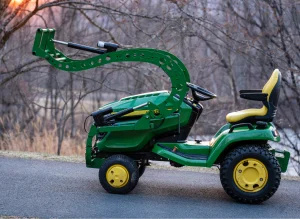
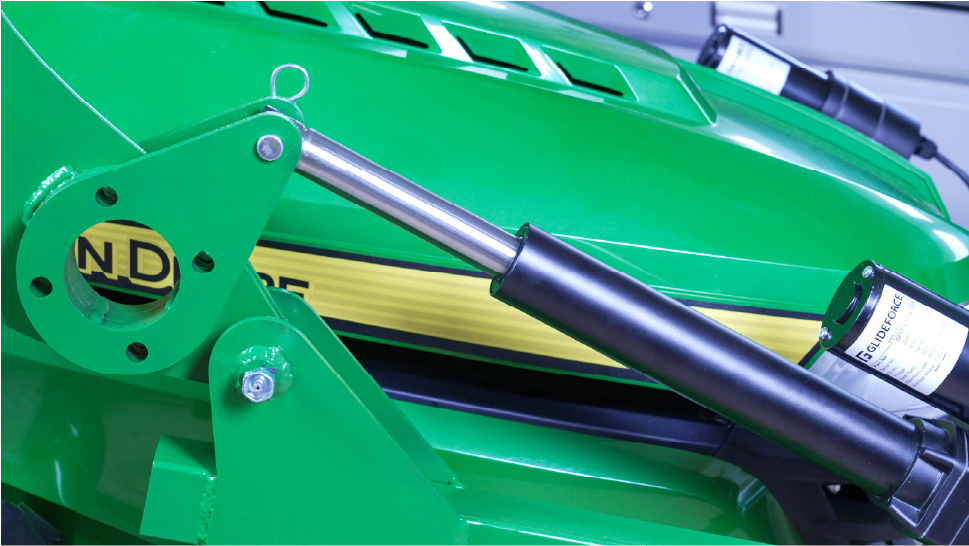
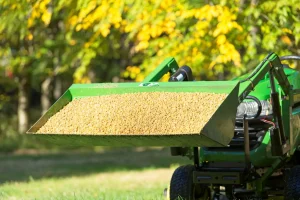
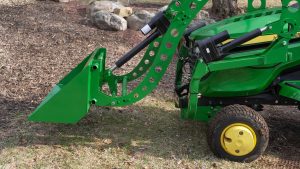
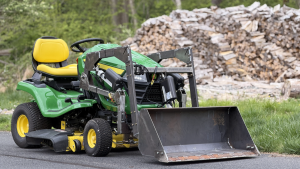
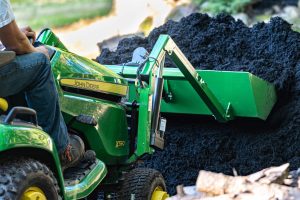
A dedicated loader completely changes how you manage your property. If you want the ultimate upgrade, grab the LGM-100 front-end loader system. It mounts securely without compromising your mower’s chassis integrity. You gain actual hydraulic scoop and lift mechanics. That means you grade loose gravel or dump heavy topsoil right from the operator seat.
Using a dump cart still means shoveling dirt by hand. A front bucket removes that labor entirely. You get the dumping height needed to clear low retaining walls, plus precision placement. Ground scraping capability lets you back-drag loose dirt to smooth out rough spots fast.
You cannot hang heavy steel off the front without balancing the rear. Adding suitcase weights is non-negotiable. Check a reliable rear counterweight and ballast guide to protect your transaxles. Proper weight stops rear wheels from lifting and gives you the traction needed to push a load.
Everyone needs a utility cart. Aim for a 10 to 17 cubic foot capacity cart with chunky pneumatic tires. We strongly prefer heavy-duty poly over steel. Why? Steel eventually rusts when left sitting with wet grass clippings. Poly beds bounce back from abuse, handle acidic manure, and usually feature a steeper swivel dump angle to clear loads faster.
Hand-cranking a spreader across a three-acre lot wastes hours. A tow-behind broadcast spreader gets the exact same job done in twenty minutes. Dial in the flow gate for grass seed, fertilizer, or liquid herbicides to get an even coat and avoid burning patches into your lawn.
Driving heavy mowers over the same path packs the dirt down, literally suffocating grass roots. Utilizing proper lawn aeration techniques with a tow-behind plug aerator physically pulls cores out of the earth. This lets oxygen and water reach the roots. Skip the cheap spike aerators, they just punch holes and squeeze the soil even tighter.
Towing a rear box scraper levels out rutted gravel driveways fast. You just drop the hitch pins, drag the blade, and let the grading action pull loose rock into the low spots. Landscape rakes work exactly the same way for clearing out small rocks and roots before seeding.
Raking leaves manually is awful. A tow-behind lawn sweeper uses spinning brushes to pick up heavy leaf drops and thick grass clippings, tossing them directly into a rear hopper.
For powdery snow under six inches, a 44-inch front snow blade clears pavement incredibly fast. But if you deal with heavy, wet slush or deep drifts, spend the extra cash on a two-stage snow blower. It throws heavy snow banks totally clear of your driveway without bogging the engine.
Standard turf tires just spin uselessly on frozen asphalt. To climb icy inclines safely, install rear tire chains and stack on weight brackets. Running through a basic winter tractor preparation checklist ensures you maintain traction all season without overheating your transmission doing standing burnouts on the ice.
The internal K46 transaxle does great work, but respecting load limits matters. Do not tow maximum-capacity loads up steep inclines for hours on end. Excess heat is what kills these transmissions. Balance your loads properly, take your time, and check your fluid levels.
John Deere makes good basic attachments. However, for aggressive work, high-performance aftermarket implements usually beat factory gear. You get thicker steel gauges and stronger welds. Wondering if your specific mower frame is tough enough for the job? Read a good John Deere X300 vs X500 capability guide to understand the exact chassis differences.
Make sure you have garage space. Buy attachments that utilize simple quick-pin hitches or easy bolt-on brackets. Store your gear under a solid roof to prevent rust on hydraulic cylinder rods and pivot points.
We take a strict engineering-first approach at LGM USA LLC. Our background is built on direct manufacturing expertise. We use heavy-gauge steel, prioritize balanced weight distribution, and ensure our designs fully protect your tractor’s chassis.
Every single implement we recommend goes through brutal ground testing on actual residential acreage. We know what breaks and what lasts. We provide transparent customer protection, meaning you get clear compatibility specs, readable installation manuals, and technical support that actually answers the phone. Our core mission is simple: we empower property owners to maximize their existing outdoor power equipment safely, reliably, and affordably.
Q1: What attachments can you put on a John Deere X300?
A: The list is surprisingly long. Most people stick to the basics (tow-behind dump carts, sweepers, and broadcast spreaders). But the X300 frame can also handle front-mounted snow blades, heavy plug aerators, and even aftermarket front-end loaders if you have the right brackets.
Q2: Can a John Deere X300 handle a front-end loader?
A: Surprisingly, yes. Deere doesn’t make an OEM loader for this specific series, but third-party aftermarket companies design systems that bolt directly to the frame. You get actual hydraulic lift, which is a big upgrade over pushing a wheelbarrow.
Q3: How much weight can a John Deere X300 pull safely?
A: On level ground, pulling 300 to 500 pounds isn’t an issue for this tractor. The real danger is hills. Dragging a fully loaded cart up a steep grade will cook the K46 transmission pretty quickly. Keep heavy hauling restricted to flat terrain.
Q4: Will ground-engaging attachments damage the X300 transmission?
A: It depends entirely on what you’re pulling. Surface tools like plug aerators or dethatchers are totally fine. But if you try dragging a heavy soil plow or a deep tiller, you’ll burn out the transaxle. Leave the deep digging to the heavier garden tractor models.
Q5: Do I need rear counterweights when using front-mounted attachments?
A: You have to balance the tractor. If you hang a heavy loader or a snow blower off the front, the rear wheels lose traction. Tossing a few suitcase weights on the back bracket keeps your steering planted and stops the tires from spinning.
Q6: Can the John Deere X300 clear snow effectively?
A: It actually does a great job pushing snow. A 44-inch front blade clears a paved driveway in just a few minutes. Just make sure you throw on tire chains and rear weights before the first freeze, standard turf tires on bare ice won’t get you anywhere.
Q7: What is the difference between John Deere X300 and X500 attachments?
A: The X300 is a lawn tractor, so its attachments are built for surface work (hauling, spreading, and aerating). The X500 sits on a larger garden tractor frame with a much beefier transmission, meaning it can run heavy-duty ground-engaging gear like tillers and heavy box blades.
Q8: How difficult is it to install attachments on the X300?
A: For anything you tow, it’s as simple as dropping a hitch pin through the drawbar. Front-mounted gear like snow blades or loaders takes a little more effort. You’ll need some basic wrenches and about thirty to forty minutes to bolt the mounting brackets to the frame.
Q9: What attachment provides the best return on investment for homeowners?
A: Without a doubt, a poly dump cart and a front-end loader. They completely replace the wheelbarrow. Whether you’re moving firewood or grading gravel, saving your back from all that manual shoveling pays for itself the very first season.
Q10: How do I maintain my John Deere X300 attachments for a long life?
A: It’s all about keeping things clean and lubricated. Hit all the grease zerks once a season, keep the cart tires aired up, and never let fertilizer sit in a spreader because it’ll rust the metal instantly. Storing your gear under a roof goes a long way, too.
Determine your immediate needs based on your property size. For everyday tasks, start with a heavy-duty poly dump cart and a tow-behind plug aerator. These two basic upgrades will save you dozens of hours every single season.
If you regularly manage landscaping, move topsoil, or handle firewood, a front-end loader immediately becomes your top priority. It completely replaces the wheelbarrow and saves your back. Ready to stop shoveling dirt by hand? Check out implement compatibility guides to rig up your John Deere X300 accessories for homeowners today.

© 2026 All Rights Reserved | LGM USA LLC
Added to cart
Check out our shop to see what's available