
You are likely standing in the middle of a garden center aisle right now. The smell of fresh cedar and dyed wood chips fills the air around you. Pallets of heavy plastic bags are stacked to the ceiling in every direction.
You are staring at them while completely unsure of exactly how much mulch you need for this upcoming yard project. Guessing your landscaping material needs always leads to highly frustrating outcomes.
There is actually a simple and foolproof formula that professional landscapers use to get the exact amount right on the first try. By the end of this breakdown, you will know exactly how to measure your garden beds accurately.
To calculate how much mulch you need, measure the length and width of your garden bed to find the square footage. Multiply that number by your desired mulch depth in inches, then divide by 324. This gives you the exact number of cubic yards required.
You can easily convert that square footage into cubic yards using basic math. You will also understand exactly when to buy individual bags versus scheduling a bulk truck delivery. Before you start choosing organic mulch over synthetic stone options, you must get the baseline math right.
To calculate how much mulch you need, measure the length and width of your garden bed to find the square footage. Multiply that number by your desired mulch depth in inches, then divide by 324. This gives you the exact number of cubic yards required.
This simple equation removes all the frustrating guesswork from your weekend yard renovations. It protects your wallet from overspending on entirely unnecessary retail bags. You will never have to stare blankly at a pallet of wood chips and guess again.
The very first step is figuring out the total square footage of the planting areas you want to cover. Grab a standard tape measure and a notepad before heading out to the yard. You cannot rely on visual estimates when calculating organic material coverage.
For standard rectangular flower beds, the math is incredibly straightforward. You multiply the total length of the garden bed by its total width. If you have a side garden that is twenty feet long and five feet wide, you have exactly one hundred square feet of working space.
Irregularly shaped beds require a slightly different approach to get accurate numbers. Break those curvy or kidney-shaped beds down into smaller imaginary squares or rectangles. Measure each small section, calculate them individually, and add those numbers together for a precise total estimate.
If you have a perfectly circular garden bed in the center of your lawn, the math requires the radius. Measure from the exact center of the bed to the outside edge to find the radius. Multiply the radius by itself, and then multiply that number by 3.14 to get your exact square footage.
Tree rings also stump many homeowners when it comes to area calculations. To get a quick working number, estimate the total diameter of the circle and multiply it by itself. Multiply that final number by 0.8 to get a remarkably close estimate of your tree ring square footage, saving you from complex geometry.
Knowing your square footage is only half the battle when planning a landscape update. You have to decide how thick your protective wood chip layer actually needs to be. Getting the depth correct is critical for suppressing aggressive spring weeds.
Proper depth control is also the most important factor in improving soil moisture retention during the hottest weeks of summer. Applying too much material will completely suffocate your expensive plants by blocking oxygen from reaching the root zone. Applying too little means the hot sun will dry out the soil quickly.
The golden rule for standard garden beds and landscape installations is a depth of two to three inches. This creates a perfect barrier against the harsh outdoor elements. It provides maximum weed suppression without harming your delicate plants or trapping too much heat.
You should adjust this slightly based on exactly what you are currently growing. Delicate annual flowers only need about one inch of coverage to stay happy and healthy. Large perennial shrubs and established bushes thrive under a full three inches of protective bark.
Trees have very specific root needs that most homeowners completely misunderstand. You should always follow the standard “donut, not a volcano” rule when working around tree trunks.
You want a solid two to three-inch layer covering the root zone, stretching out to the canopy drip line. However, you must leave a few inches of completely bare soil directly against the actual tree trunk. This allows the sensitive bark to breathe properly and prevents destructive wood rot.
Now that you have your total square footage and your desired depth, it is time for the final calculation. You multiply your square footage by your depth in inches. Take that resulting number and divide it by 324.
Your final answer is the exact number of cubic yards you need to purchase. Why do professional landscapers always divide by 324? One single cubic yard of material covers exactly 324 square feet at a depth of one inch.
If you have a 200-square-foot bed and want a 2-inch depth, you multiply 200 by 2 to get 400. Divide 400 by 324, and you find that you need 1.23 cubic yards to finish the job. This specific math formula works flawlessly every single time, regardless of property size.
Knowing when to buy bags versus bulk truck delivery saves serious money. Let’s break down exactly what makes sense for your specific property size and budget.
Walking the aisles of a local home improvement store means dealing with individual plastic bags. The vast majority of these standard retail bags contain exactly two cubic feet of material.
A single two-cubic-foot bag will cover exactly twelve square feet of ground at a standard two-inch depth. If you want a deeper three-inch layer, that same bag only covers eight square feet.
Bags are incredibly convenient for small touch-up jobs or tiny front porch planter boxes. They keep your car clean and require very little physical effort to move around the property.
The math converting bags to yards is the most important calculation you will learn today. It takes exactly 13.5 standard bags to equal one single cubic yard of bulk material. If your calculation says you need two cubic yards, you will be loading twenty-seven heavy bags into your vehicle.
At that volume, buying individual plastic bags becomes significantly more expensive. Bulk delivery is vastly cheaper for medium and large residential projects. The trade-off is that bulk delivery means a huge dump truck will leave a large pile on your driveway.
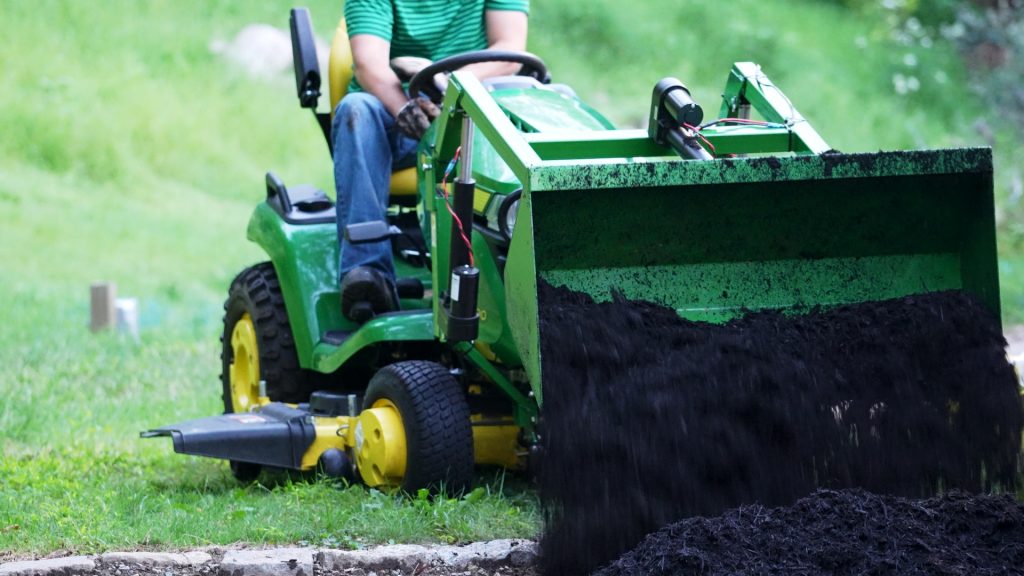
You will have to move that entire mountain of material using a pitchfork and a heavy wheelbarrow. Always place a large tarp down on your driveway before the delivery truck arrives. This simple step prevents deep organic stains from ruining your expensive concrete surfaces.
Different organic materials behave differently once they are actually spread across your garden beds. Standard wood chips and shredded hardwood bark interlock tightly and hold their place well. Because they interlock securely, you do not need to overcompensate for your math when settling.
Pine straw requires a slightly different approach when calculating your total coverage needs. Fresh pine needles are incredibly fluffy and airy when first applied to a garden bed. A three-inch layer of fresh pine straw will quickly compress down to a single inch after a few heavy rainstorms.
When calculating your needs for pine straw, always plan for an initial depth of four to five inches. This guarantees you will have adequate ground protection once the lightweight material settles naturally over the first month.
Take a drive through any suburban neighborhood, and you will see trees buried under massive cones of wood chips. This widespread practice is incredibly dangerous for the long-term health of the tree. Piling organic material high against a tree trunk aggressively traps moisture against the sensitive bark.
This dark, wet environment acts as an open invitation for bark rot, boring insects, and fatal fungal diseases. A beautiful tree buried in a volcano will slowly suffocate over several years. Always pull the material away from the base to let the trunk breathe naturally.
Homeowners love the idea of laying down thick black landscape fabric before spreading their new wood chips. They incorrectly assume this creates a permanent, impenetrable barrier against all future weeds. Landscape fabric is incredibly useful when placed underneath heavy gravel or decorative river rock.
It is a nightmare when placed underneath organic, biodegradable materials like bark. As your wood chips slowly decompose over the seasons, they turn into a rich layer of fresh compost sitting directly on top of your fabric. Wind-blown weed seeds will land in this new topsoil and grow their roots straight down through the woven plastic barrier.
You cannot simply dump fresh wood chips directly over a garden bed full of active, aggressive weeds. It might look clean and beautiful for the first two weeks. Those established weeds already have deep root systems pulling energy from the soil.
They will easily push their way through three inches of dark bark and completely ruin your new landscape design. Always spend the time pulling existing weeds by the roots before spreading your new material. Applying a pre-emergent weed preventer directly to the bare soil before covering it adds a big layer of secondary protection.
Executing a large property overhaul requires more than just a simple tape measure and a free weekend. Moving heavy organic materials across acres of land demands serious power and efficiency. With years of experience engineering top-tier commercial landscaping equipment, LGM USA understands that managing raw materials properly is critical.
We know exactly how physically punishing bulk material handling can be on professional job sites. Our core mission is to make landscaping highly cost-effective and physically efficient for ambitious homeowners. We build reliable, heavy-duty machinery that handles the heavy lifting so you do not have to.
Understanding the raw materials you work with is critical to designing the heavy machinery that moves them. The right equipment, paired with an accurate material calculation, saves thousands of dollars in wasted labor hours. You can always trust our engineering experience to guide your professional ground care strategies.
Q. How much do I need for 500 square feet?
A. For a 500-square-foot garden area at a standard two-inch depth, you need approximately 3.1 cubic yards of material. If you are purchasing at a retail store, this equals about 42 standard two-cubic-foot bags.
Q. How many bags are in a cubic yard?
A. There are exactly 13.5 standard two-cubic-foot bags inside one single cubic yard. Knowing this exact conversion helps you easily compare bulk delivery prices against retail bag prices at your local garden center.
Q. How deep should it be applied?
A. You should generally apply two to three inches of material for most flower beds and ornamental trees. Delicate annual plants only require one inch. Completely bare dirt areas might need up to four inches for heavy weed suppression.
Q. What is the formula for calculating?
A. The exact professional formula is simply the square footage multiplied by the desired depth in inches, divided by 324. The final resulting number will always be the total cubic yards required for your specific landscaping project.
Q. How much does a bag cover?
A. One single standard two-cubic-foot bag covers exactly twelve square feet of garden space at a two-inch depth. If you increase the depth to three inches, that same bag will only cover eight square feet.
Q. Is 2 inches enough?
A. Yes, a two-inch layer is considered the ideal depth for residential landscaping. It easily retains critical soil moisture and blocks sunlight from reaching weed seeds without suffocating your underlying plant root systems.
Q. How often should I replace my landscape materials?
A. For organic materials like shredded bark or wood chips, you should plan to refresh your beds once a year. A light one-inch top dressing every spring restores the vibrant color and maintains the necessary weed barrier without burying your plants.
Guessing your landscape material needs is officially a thing of the past. You now have the exact professional blueprint required to plan your next yard renovation perfectly. By carefully measuring your square footage and choosing the proper protective depth, you can calculate the exact yardage required.
Taking ten minutes to walk your yard with a tape measure saves you from the familiar headache of staring at an unused mountain of wood chips in your driveway. Just jot down your bed dimensions, run the quick math, and you can confidently hit the hardware store or call your bulk supplier knowing exactly what you actually need.

© 2026 All Rights Reserved | LGM USA LLC
Added to cart
Check out our shop to see what's available