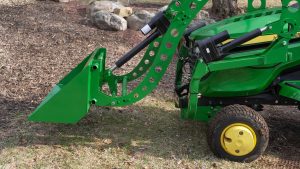

Summary: Quick-swap tractor attachments make property maintenance faster and easier by allowing operators to change buckets, forks, blades, and other implements in seconds without struggling with heavy pins or manual tools. These systems reduce downtime, improve safety, minimize physical strain, and increase tractor versatility for tasks like landscaping, material handling, mowing, grading, and digging. Choosing the right quick-attach system, such as a Universal Skid Steer Quick Attach (SSQA), ensures better compatibility, efficiency, and long-term performance for acreage owners and small farmers.
Picture this: You are out on your acreage on a freezing Saturday morning, staring down a massive weekend chore list. You need to scoop up a pile of crushed gravel with your loader bucket to patch a driveway washout. Ten minutes later, that job is done, and you need to swap over to pallet forks to unload a heavy pallet of feed sitting by the barn.
If you are still running standard pin-on gear, your morning is about to grind to a halt. You get to spend the next 45 minutes kneeling in the mud, hammering away at rusted steel pins, fighting frozen linkages, and cursing under your breath while daylight slips away. It is exhausting, brutal on the lower back, and turns a simple weekend project into a grueling test of patience.
Thankfully, there is a better way to manage your property. Transitioning to quick-swap tractor attachments completely changes how you operate, letting you jump from job to job without ever grabbing a hammer or turning a wrench.
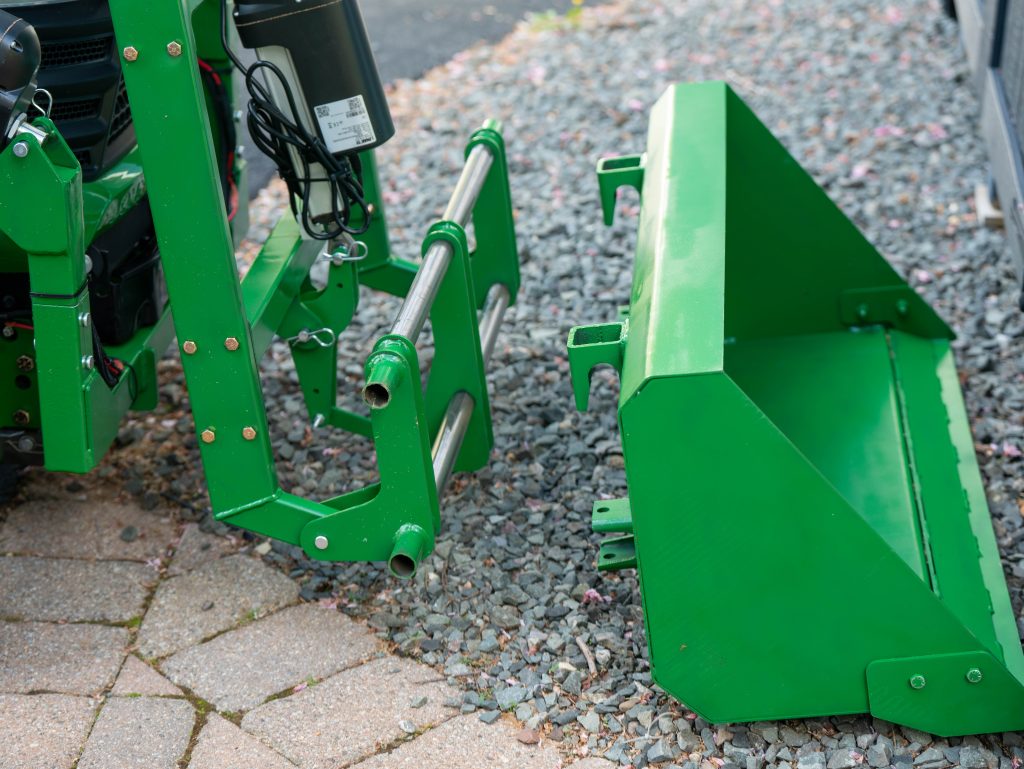
Quick Answer: A quick-attach system is a specialized mounting interface attached to your tractor’s loader arms or rear hitch. It allows you to lock, release, and swap between different tractor equipment in seconds without dealing with manual pins, bolts, or heavy alignment hurdles.
For decades, compact tractors relied entirely on pin-and-bushing setups. Every bucket, fork, or blade meant sliding solid steel shafts through tight sleeves on both the machine and the tool.
Over time, water intrusion, dirt grit, and heavy loads distort those holes and rust them solid. You end up soaking everything in penetrating oil and whaling on a drift punch just to get an implement off.
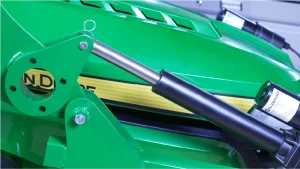
Modern quick-change systems do away with individual pins entirely. A unified mounting plate uses spring-loaded levers or hydraulic locking wedges, letting you drop one tool and pick up another in less time than it takes to walk around the tractor.
While quick plates dominate loader work on the front of the machine, the rear has caught up fast. Old-school three-point hitch implementation meant wrestling heavy lift arms and top links into position by hand, often tweaking a shoulder in the process.
Today’s quick hitch systems let you back right up to rear implements like box blades or finish mowers, hook up from the driver’s seat, and get straight to work.
Field tests and operator logs show that swapping old pin-on implements regularly eats up 20 to 30 minutes per change once you factor in alignment struggles and tool retrieval.
If you switch tasks four or five times a day, you are wasting an hour and a half just standing in the dirt. A solid tractor attachment system cuts that swap time down to roughly 30 seconds, keeping your machine moving and your projects on schedule.
Pinching fingers, dropping heavy iron brackets on your boots, and swinging hammers overhead are daily hazards on small farms and acreages.
Lever-lock and hydraulic interface plates take the heavy lifting out of the equation. You let the machine’s hydraulics or simple leverage do the hard work, saving your joints from unnecessary wear and tear.
Property upkeep changes wildly throughout the year. Spring calls for tilling and grading; summer demands mowing and clearing brush; fall means hauling firewood; and winter brings snow plowing.
When changing tools takes zero effort, you stop putting off chores just because swapping implements feels like too much of a hassle.
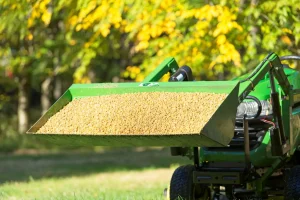
Moving bulk mulch, gravel, and dirt requires a standard utility bucket, but swapping over to pallet forks opens up the ability to lift lumber crates, feed bags, and heavy equipment effortlessly.
When buying new gear, always remember to choose the right tractor loader attachments that match your specific machine lift capacities and front axle weight limits.
Keeping gravel driveways smooth or leveling out a rut-filled pasture used to be an all-day ordeal. When you run modern tractor attachments like box blades, land planes, and landscape rakes on a quick-change plate, smoothing dirt or gravel takes a fraction of the time. Box blades act like a small scraper to shave down high spots and dump material into holes, while land planes glide flat across washboard ruts so you don’t have to constantly feather your hydraulic controls.
Tackling overgrown fence lines, thick briars, or storm-downed timber requires heavy-duty muscle from your tractor implements. Hooking up a heavy root grapple lets you clamp onto messy piles of brush and haul them away without getting out of the seat. Meanwhile, rear- or front-mounted rotary mowers clear tall grass and pasture weeds quickly, keeping your acreage looking sharp and well-managed without slowing down your workflow.
Whether you are planting a massive garden plot or setting new fence posts across your property, rear-mounted tillers and PTO-driven augers bring heavy-duty utility straight to your small acreage.
Before buying any quick-attach frame or heavy implement, check your tractor’s loader lift capacity and engine horsepower. Bolting a massive industrial grapple onto a light sub-compact tractor will overload your front axle and ruin your steering control.
Advanced equipment like 4-in-1 buckets, hydraulic sweepers, or grapples require auxiliary hydraulic remotes. Make sure your tractor has the correct flow rates and quick-disconnect lines plumbed before investing in powered tools.
If you want total freedom when shopping for attachment systems for tractors, look for machines and tools built with a Universal Skid Steer Quick Attach (SSQA) plate. Instead of being locked into one brand’s proprietary inventory, this universal standard opens up thousands of affordable, heavy-duty aftermarket options. Whether you are buying a used set of forks or a brand-new snow pusher, you know it will lock right onto your loader frame.
To get the most value out of your setup, look for a Universal Skid Steer Quick Attach (SSQA) mounting plate. This industry standard gives you access to thousands of affordable aftermarket tractor equipment options without locking you into proprietary brand ecosystems.
A. They are interchangeable tools—such as buckets, forks, and grapples—connected through a universal mounting plate that lets you switch equipment in under a minute without hammering pins.
A. It uses a sloped upper mounting lip and retractable bottom locking pins. The operator scoops the top lip under the implement’s bracket, tilts the loader back, and drops the locking levers.
A. With a modern quick-swap setup, changing an implement takes between 30 and 60 seconds, compared to 20 to 30 minutes with traditional pin-on systems.
A. Not automatically. While universal plates (like SSQA) fit most compact and utility tractors with compatible loader brackets, you must verify your loader’s lift capacity and mounting style first.
A. SSQA stands for Universal Skid Steer Quick Attach, which is the industry standard mounting plate used across most modern compact tractors and skid steers.
A. Yes. Many manufacturers sell weld-on or bolt-on conversion plates that let you upgrade older pin-on loader arms to a quick-change system.
A. Yes. Quick hitch tractor attachments allow you to hook up three-point implements like box blades and rotary cutters directly from the tractor seat.
A. Standard mechanical plates only require manual levers. However, powered tools like grapples or 4-in-1 buckets require auxiliary hydraulic front or rear remotes.
A. Keep moving parts clean and apply high-temp lithium grease to all pivot points and sliding spring pins every 50 hours of operation.
A. Never use a hammer to force it. Lift your loader slightly, wiggle the implement to relieve structural pressure, and clear out packed dirt from the channel.
At LGM USA, we have spent years working hands-on with agricultural and utility equipment. We built our reputation on cutting through marketing fluff to give acreage owners and small farmers practical, no-nonsense advice.
Our team works right alongside everyday operators who demand real durability from their tools. We understand that your equipment needs to start on the first turn and hold up to punishing daily tasks, which is why every guide we write focuses on real-world reliability and efficiency.
Upgrading your machine with reliable tractor loader attachments and quick-change hardware is one of the smartest investments you can make for your property. It cuts out the wasted hours spent wrestling with stubborn pins, saves your lower back, and lets you tackle multiple chores without losing momentum.
Ready to stop wasting half your Saturday wrestling with stuck pins? Take a hard look at what is sitting in your shed right now, figure out which swaps slow you down the most, and get your equipment squared away so your tractor is always ready to work when you are.

© 2026 All Rights Reserved | LGM USA LLC
Added to cart
Check out our shop to see what's available