
Staring at a huge lineup of riding mowers makes it hard to figure out the lawn tractor vs garden tractor debate. You feel completely overwhelmed by the identical sheets of painted metal. The deep frustration of choosing the wrong machine is a very real problem for American homeowners.
Buying an underpowered unit means risking a melted transmission midway through the summer. Conversely, overspending wastes thousands of dollars on heavy mechanical features you will never actually need. Making the right choice comes down to knowing exactly what structural components hide beneath the hood.
The simple answer is that lighter residential mowers are engineered exclusively for cutting flat grass. Heavy-duty models feature reinforced steel frames and commercial-grade transmissions meant for serious ground-engaging work. Taking a chance on a light-duty machine for heavy farm chores will destroy your investment.
When comparing a garden tractor vs. a lawn tractor, the very first thing you notice is the build quality. The lighter residential version is engineered specifically to cut grass on mostly flat, manageable suburban lots. They handle weekly summer mowing without breaking a sweat.
Their stamped steel frames easily support the weight of the driver and a standard cutting deck. However, they completely lack the structural rigidity required for heavy towing. If you attach a heavy load of wet topsoil, the thin metal frame can easily twist.
The lighter hydrostatic transmissions in standard models are usually sealed units. They cannot be easily serviced, drained, or refilled by the average homeowner. Pushing them beyond their strict design limits on steep hills quickly overheats the internal hydraulic fluids.
Replacing a blown sealed transmission often costs more than half the original purchase price. This makes it a very painful financial lesson for property owners. For a suburban homeowner who wants a neatly trimmed yard, these lighter machines remain highly efficient.
They use significantly less fuel than their huge counterparts. They also fit easily into a standard garage alongside the family vehicle. As long as you respect their physical limits, a light-duty residential machine provides excellent, reliable service.
Spotting the difference between lawn tractors and garden tractors requires inspecting the heavy-duty hardware. Heavy-duty models are essentially scaled-down agricultural equipment. They feature thick, fully welded frames that will not flex under extreme mechanical stress.
These heavier machines sport robust, highly serviceable transmissions. They easily transfer serious torque to the oversized rear wheels. That heavy rear-end weight means your tires actually grip the dirt rather than spinning out. You won’t get stuck the second it rains, and pushing through a nasty January snowstorm actually becomes manageable. If you live on a bumpy, rock-filled piece of land, this is the setup you need sitting in the shed.
Want to see where your money really goes? Get down on the floor and look at the parts that take a beating every single weekend. The structural upgrades are pretty obvious once you know what to check for out on the dealership lot:
When you look under the hood of a standard residential mower, you usually find a single-cylinder engine. These smaller engines are perfectly capable of spinning the mower blades at high speeds. They provide just enough power to propel the machine across a flat yard.
However, they do not generate the low-end torque required for heavy pulling. A heavy-duty machine almost always features a large V-twin engine. This twin-cylinder design produces significantly more horsepower and runs much smoother under heavy loads.
The extra power ensures the engine does not bog down when pushing a snow blower. It maintains consistent blade speed even when cutting through knee-high, soaking-wet grass. That extra horsepower translates directly into finishing your yard chores much faster.
The transmission is the heart of any piece of outdoor power equipment. Standard residential machines use light-duty hydrostatic drives designed strictly for low-resistance travel. They use lightweight internal components that cannot handle extended strain.
Heavy-duty machines use commercial-grade hydrostatic units or heavy gear-driven manual transmissions. These robust units feature internal gears and strong hydraulic pumps. They are built to confidently transfer engine torque directly to the rear wheels.
Serviceability is another large difference between the two transmission types. Here are the key transmission maintenance features to look for when shopping:
A common source of confusion is distinguishing between garden tractors and riding mowers. The term “riding mower” is actually a broad umbrella category. It safely includes zero-turn mowers, small rear-engine riders, and traditional front-engine machines.
Zero-turn mowers are fast and highly maneuverable. However, their sensitive dual-hydrostatic wheel drives make them poor candidates for pulling utility carts. Rear-engine riders are compact but lack the power to do anything besides clip grass.
Heavy-duty front-engine machines belong in a class of their own. They are true multi-tasking workhorses rather than single-purpose grass cutters. Investing the extra money in a heavier steel frame immediately opens the door to amazing attachments.
The ability to quickly swap from a belly mower deck to a front-mounted snow blower is unmatched. This amazing versatility ensures your expensive equipment never sits idle in the storage shed. You get a big return on your investment twelve months out of the year.
If you are actively searching for the best tractor for a 1-acre lawn, consider your topography. A perfectly flat, obstacle-free single acre can be handled with a standard light-duty residential machine. This simple setup comfortably finishes the weekly mowing chore in under an hour.
Buying a residential mower saves you thousands of dollars at the local dealership. However, if that single acre is a steep, rocky hillside, things change dramatically. Rough terrain and a long dirt driveway will cause a light-duty machine to fail.
For medium-sized properties that require serious maintenance, upgrading to a heavier frame makes sense. Buying a heavy-duty machine means you can reliably pull core aerators and heavy steel dump carts. You never have to worry about damaging the delicate internal gears.
It guarantees you always have the raw mechanical power to clear deep winter snow. You are essentially buying long-term peace of mind. Your equipment can easily handle whatever crazy weather or ambitious backyard project comes your way.
Making an informed equipment purchase requires an honest evaluation of your property. Skipping the initial research phase is the fastest way to end up with a broken machine. Taking a methodical approach will protect your investment and prevent severe buyer’s remorse.
Walk your entire property slowly and take highly detailed notes. Pay close attention to the steepest inclines, the roughest patches, and tight fence gates. Follow these exact steps to ensure you bring home the right piece of machinery.
Seeing a price tag of $5,000 or $6,000 on a heavy-duty machine can definitely make your jaw drop. It is tempting to look at a $1,800 residential model and assume it is good enough for your yard. But when you buy outdoor equipment, you really have to think about how much cash you will waste replacing it later.
A serious commercial machine, built with a thick, welded steel frame, is essentially a permanent garage fixture. If you keep up basic maintenance, that $6,000 investment will comfortably run hard for 20 or 30 years. You can actually unbolt the transmission and fix problems instead of throwing the whole mower in the local scrap yard.
Cheaper residential mowers are designed for a much shorter lifespan. Even if you take perfect care of a $1,800 unit, the thin metal frame and sealed drive rarely survive past ten years. You will easily buy three cheap machines over time, ultimately spending more money than the cost of one heavy rig.
The greatest advantage of owning a heavy-duty machine is mechanical adaptability. Instead of buying dedicated machinery for every yard task, you can add attachments to your existing machinery. Turning your mower into a multi-tool saves significant space and money.
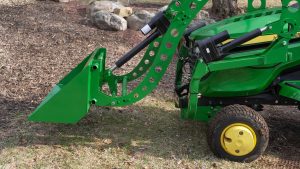
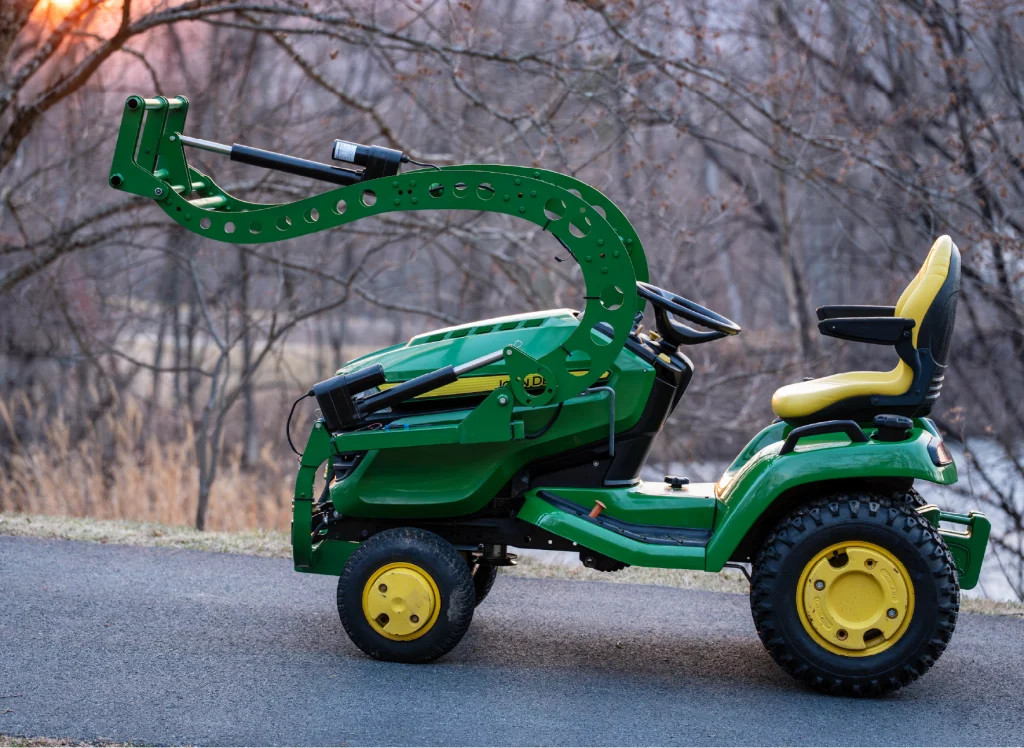
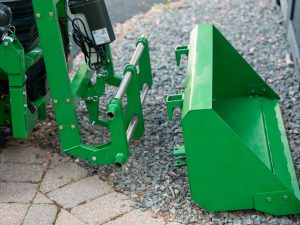
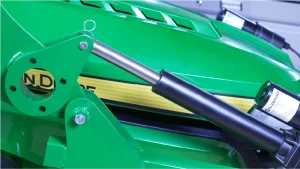
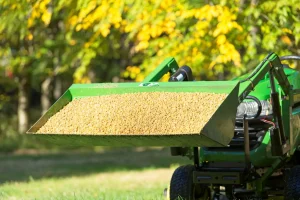
Adding an innovative electric front-end loader completely revolutionizes how you handle property work. When you upgrade with premium, American-made attachments, you eliminate backbreaking manual labor. You can finally tackle huge landscaping dreams that previously seemed impossible.
Bolting a solid loader to the front of your rig completely changes your weekend routine. Just think about the sheer amount of backbreaking work you get to skip:
Not every heavy-duty machine can accept every aftermarket attachment. You must pay close attention to how the manufacturer designed the front axle and frame rails. Some brands use proprietary mounting brackets that force you to buy their expensive branded tools.
Premium aftermarket manufacturers design their equipment to fit the most popular tractor platforms. They specifically engineer their electric loaders to mount securely to robust models like John Deere. This guarantees operator safety and prevents accidental damage to the tractor frame.
Always check the weight capacity of your specific front axle before installing heavy front-mounted tools. Upgrading your front tires to a higher ply rating is also a smart move. This ensures the tires can comfortably handle the heavy weight of a fully loaded bucket.
Q. Can I pull a heavy dirt scraper with my standard residential mower?
A. You should never pull heavy ground-engaging equipment with a standard light-duty machine. Doing so will immediately overheat the sealed hydrostatic transmission. It can also completely crack the thin stamped steel frame.
Q. Why do heavier models cost so much more money upfront at the dealership?
A. The higher price tag directly reflects the manufacturing cost of thicker steel frames. You are also paying for robust, fully serviceable transmissions. These machines are heavily engineered to last for several decades.
Q. Will a heavier machine tear up my grass?
A. Not if the ground is dry. Those oversized rear tires actually spread the weight out so you won’t sink. Just stay off the lawn right after a heavy rainstorm so you don’t leave muddy tracks.
Q. Can I attach a front-end loader to any brand of basic riding mower?
A. Front-end loaders require specific heavy frame mounting points and structural strength. Premium attachments are precisely engineered for robust platforms like the John Deere series.
Q. Is a heavy-duty machine actually harder to steer than a small mower?
A. Heavy-duty machines are physically heavier, but modern engineering includes vastly improved steering gear ratios. Many top-tier models even feature power steering, making them surprisingly easy to steer.
Purchasing the exact right yard equipment is about matching mechanical limits to physical property demands. If you only need to cut perfectly flat grass on a tiny lot, a light-duty mower will work just fine. But if your land requires frequent heavy towing, investing in a heavy-duty steel frame is the only logical option. Taking the time to evaluate your long-term landscaping needs honestly ensures you buy a highly reliable machine.
Once you have the right heavy-duty machine sitting in your garage, unlock its full working potential. Adding premium attachments transforms a basic grass cutter into a powerhouse. Stop breaking your back and visit https://lgmusa.com/ online today to explore smart utility attachments that make property work truly enjoyable.

© 2026 All Rights Reserved | LGM USA LLC
Added to cart
Check out our shop to see what's available