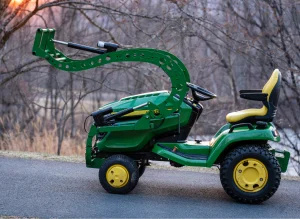

Nobody wants to shovel five yards of wet bark or crushed rock into a wobbly wheelbarrow on a hot Saturday. But spending twenty-five thousand dollars on a high diesel tractor just to clear brush and haul gravel twice a year is crazy. Most homeowners just want enough lifting muscle to get heavy weekend work done without draining their savings or giving up parking space in the garage.
If you already own a riding mower, adding a dedicated John Deere loader attachment bridges that gap instantly. You get genuine bucket utility without financing a commercial rig. Here is a straight, real-world look at lift limits, turning radius, frame wear, and property use so you buy what you actually need.
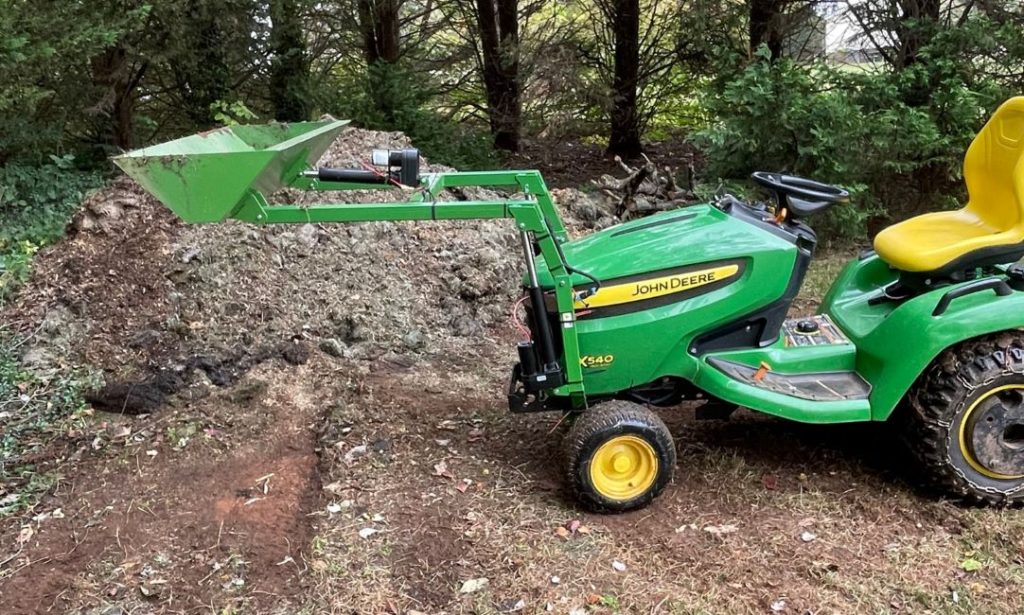
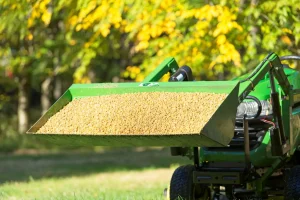
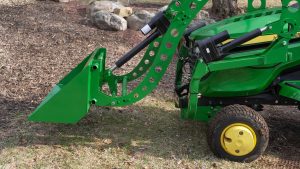
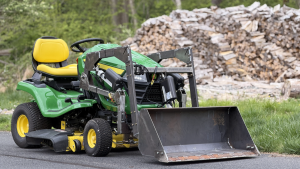
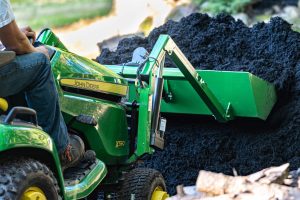
The QORE Loader is an engineered QORE utility attachment built specifically for standard riding mowers and lawn tractors. Rather than forcing you into a second motorized vehicle, it turns your current mower into a working rig. Think of it as a rugged lawn mower loader bucket that scoops mulch, spreads topsoil, and carts split firewood across finished turf without tearing up grass or rutting your yard.
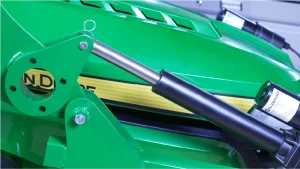
What really sets it apart is the power source. Instead of relying on a messy hydraulic pump that leaks fluid all over your driveway, the QORE system functions as a high-torque electric front-end loader. It uses sealed electric linear actuators powered directly from a 12-volt battery system.
You push a button, and the heavy-duty ball screw mechanisms provide exact lifting and dumping actions. This design completely eliminates the need for expensive hydraulic hoses, fluid reservoirs, and messy maintenance, making it a perfect tractor bucket attachment for homeowners who just want to get the job done without calling a mechanic
Traditional loaders are heavy, permanently mounted steel frameworks bolted to sub-compact or agricultural tractors. Running off dedicated engine-driven hydraulic pumps, multi-spool valves, and thick high-pressure cylinders, they are engineered for raw down-pressure and extreme breakout force.
These machines are built to weigh thousands of pounds so they do not tip over when carrying huge concrete pallets or ripping deep roots out of hardpack clay.
If your daily routine involves digging construction footings in hard clay, clearing raw land, or running a commercial earthmoving operation, a dedicated hydraulic machine is built for that exact punishment.
However, that power comes with serious baggage. Hydraulic fluid leaks happen. Hoses blow under pressure. You need a heated barn or dedicated shed to park a machine this large, and driving a three-thousand-pound rig across a wet suburban lawn will leave twelve-inch tire ruts that take years to fix
The main difference comes down to practical scale and intended workload. QORE is a purpose-built compact loader attachment engineered for residential lawn tractors and tight suburban yards. Traditional loaders are heavy hydraulic tools designed for large acreage, utility tractors, and deep earthmoving.
When shopping for a lawn tractor front-end loader, matching total equipment weight to your lawn layout saves you from broken fence gates, crushed sprinkler heads, and ruined turf. You also have to consider what your current tractor frame and transaxle can realistically handle before bolting on heavy steel.
Bolting on a traditional loader usually takes hours of wrestling subframes, routing high-pressure fluid lines, and mounting counterweights. In contrast, this compact loader attachment latches on fast using an engineered bracket. Checking your QORE Loader compatibility ensures an exact fit for your machine, whether you need a nimble John Deere X300 loader attachment or a heavier John Deere X500 loader attachment for estate chores.
A full-size tractor with a fixed loader bucket can stretch over twelve feet long. It simply will not clear a 48-inch residential garden gate. The QORE rig keeps your mower’s original zero-turn or tight radius intact. You can weave between raised beds, clear fence lines, and park inside a normal garage stall without unhooking three hundred pounds of steel every night.
Let’s be realistic a commercial tractor digs through packed clay, but it weighs thousands of pounds. The QORE system acts as a high-efficiency utility attachment for lawn tractor owners, scooping loose dirt, hauling river rock, and dumping compost safely within your transaxle limits. One homeowner noted that putting the bucket on his X350 cut four full weekends of manual wheelbarrow shoveling down to a single Saturday afternoon.
| Feature | QORE Loader | Traditional Front-End Loader |
| Primary Workload | Residential yard care, topsoil, mulch, gravel | Deep digging, land clearing, farm excavation |
| Compatible Machines | Lawn & garden tractors (John Deere X300/X500) | Sub-compact, compact, and farm tractors |
| Installation | Quick-swap mechanical latch system | Complex, semi-permanent hydraulic plumbing |
| Storage Footprint | Standard residential single-car garage | Large shop bay, pole barn, or outdoor pad |
| Lawn Impact | Gentle on manicured sod and soft ground | Heavy ground pressure leaves deep ruts |
At LGM USA LLC, our roots are in real agriculture, custom fabrication, and residential equipment engineering. We know exactly how frustrating cheap, flimsy yard tools can be when they bend on the first day.
That is why our engineering team designs and field-tests high-performance attachments like the QORE system to withstand genuine homeowner abuse from hauling wet gravel to moving heavy firewood without failing when you need them most.
We build equipment using thick steel, sealed electronics, and proven geometry because we believe American property owners deserve tools that actually work. We do not sell huge agricultural rigs, we focus purely on maximizing the potential of the tractors people already park in their garages.
Conclusion
You shouldn’t have to choose between a broken back and a twenty-thousand-dollar equipment loan. While traditional hydraulic loaders dominate heavy farm work, they are complete overkill for the average residential yard.
The QORE Loader delivers the exact lifting power you actually need by putting the mower you already own to work. Stop wrestling the wheelbarrow, save your garage space, and get your weekend back. Check your tractor’s compatibility today to get started.
Q. What is the main difference between the QORE Loader and a traditional front-end loader?
A. QORE rigs attach straight to your everyday riding mower to move things like topsoil and mulch. Traditional loaders are huge, hydraulic-driven machines bolted to diesel tractors meant for heavy farm excavation.
Q. Is the QORE Loader a traditional front-end loader?
A. Not at all. Think of it as a smart utility add-on for your mower. It doesn’t rely on hydraulic cylinders, so it’s meant for hauling surface materials rather than digging deep trenches.
Q. What John Deere tractors are compatible with the QORE Loader?
A. Right now, the setup bolts onto John Deere’s X300 and X500 series mowers.
Q. Is the QORE Loader suitable for homeowners?
A. It’s built almost exclusively for them. If you manage a typical one-to-five acre property and you’re tired of pushing a wheelbarrow every weekend, this fits the bill perfectly.
Q. Can the QORE Loader move dirt, mulch, and gravel?
A. Sure. You can easily cart around loose soil, wood chips, and river rock. You just have to keep the loads within whatever weight limit your mower’s transaxle can handle.
Q. Is a traditional front-end loader better for heavy-duty work?
A. Without a doubt. Ripping out tree stumps or breaking hard clay requires the raw breakout force you only get from a real hydraulic diesel rig.
Q. Which is easier to store: a QORE Loader or a traditional front-end loader?
A. The QORE wins easily here. You just unpin it and lean the bucket against your garage wall. A full-size tractor loader essentially demands its own shed or barn space.
Q. Can a QORE Loader replace a compact tractor?
A. If your main goal is hauling landscaping supplies and doing seasonal yard cleanups, it completely saves you from financing a second machine.
Q. What should I consider before buying a QORE Loader?
A. Double check the actual model of your mower, measure the width of your fence gates and be realistic about the weight you plan to lift at one time.
Q. Which is better for property maintenance: QORE or a traditional front-end loader?
A. If you have a fenced-in yard and care about keeping your grass intact, go with QORE. If you run wide-open acreage and need to move serious earth, get a traditional loader.

© 2026 All Rights Reserved | LGM USA LLC
Added to cart
Check out our shop to see what's available