Buying the wrong agricultural equipment hurts. We see the same mistake happen every single spring. A property owner drops thousands of hard-earned dollars on a machine that barely scratches their hard clay dirt. On the flip side, they might buy a massive, heavy rig that completely ruins their soft front lawn and crushes their landscaping.
Horsepower alone is a terrible metric to base your buying decision on. Dealerships love to push engine size, but engine output does not dictate how well a machine will actually lift, dig, or maintain your property. As we evaluate the 2026 market, the choices feel completely endless, and the marketing language only adds to the confusion. Sub-compacts are sitting everywhere on the lot, making it incredibly difficult to figure out what you truly need.
If you are trying to figure out the best tractor for acreage, or getting lost in the classic garden tractor vs compact tractor debate, you have to look past the sales pitch. We need to look at frame weight, implement lifting capacity, and how power is actually transferred to the soil. Let us break down the mechanical reality in this Garden Tractor vs Compact Tractor comparison so you can make a smart, permanent investment for your land.
Marketing buzzwords make equipment shopping confusing. A garden tractor is fundamentally a heavy-duty riding mower. Its primary job is cutting grass and pulling light loads.
These machines sit on stronger frames than cheap big-box mowers, often using thicker steel. But they are still just mowers. If you want a pristine lawn and occasionally need to tow a yard cart, this category is for you. They maneuver around delicate landscaping without leaving heavy ruts.
Any basic garden tractor comparison focuses purely on mower decks and blade speeds. Compare that to a compact tractor comparison, which highlights hydraulic lifting power. The entire lawn tractor vs compact tractor debate boils down to soil work. Do not try to weigh a garden tractor vs compact tractor for heavy jobs; mowers lack the cast-iron strength for earthmoving. While great for turf, if you need a true compact tractor for small farms or the best tractor for acreage to handle serious lifting, a garden mower will absolutely fail you.
These units feature heavily reinforced mower decks. The steel can take a beating from stray branches. They also use upgraded transaxles that won’t immediately burn out on slight hills.
However, they rely entirely on rubber belts to power their tools. Belts are cheap to replace. But they easily slip under heavy stress. They do not typically offer complex hydraulics or independent power take-off (PTO) shafts. This means any attachment you run is powered by a rubber belt connected to the engine pulley. While belts are cheap to replace, they limit the sheer force that can be applied to an implement.
To avoid breaking your equipment, stick to these jobs:
This is a completely different class of machinery. A compact tractor is a scaled-down farm machine. It is engineered for digging, lifting, and heavy ground engagement.
These vehicles apply raw power straight to the land. When we talk with property owners managing large plots, this is the equipment they actually need. They have cast-iron rear ends, are substantially heavier, and use cutting-edge innovation to transfer engine power to a range of heavy-duty tools.
Durability is the entire point here. These machines use liquid-cooled diesel engines. That gives you the low-end grunt needed to push a bucket into compacted gravel.
They feature robust hydraulics and an independent power take-off. Most importantly, you get a standard three-point hitch for lifting heavy implements. Nearly all contemporary vehicles come equipped with locking rear differentials and selectable four-wheel drive as standard equipment. This standardized hitch system allows you to lift, lower, and angle heavy tools like box blades and rotary cutters with hydraulic precision.
We consistently recommend these machines for property owners who need to do more than just cut grass. Their capabilities are broad and farm-focused:
| Feature | Garden Tractor | Compact Tractor |
| Engine | Gasoline | High-Torque Diesel |
| Hitch | Simple Drawbar | 3-Point Hitch |
| Loader | None | Heavy-Duty Front-End |
| Acreage | 1 to 3 Acres | 5+ Acres |
Power delivery separates these machines. Garden tractors use high-revving gas engines. They are perfect for fast-spinning mower blades. But they lack pushing power.
Compact tractors rely on diesel torque. Torque pushes a heavy loader bucket into hard soil without stalling the engine. The dedicated hydraulic pumps keep your steering smooth under strain. Because diesel engines generate peak torque at lower RPMs, these machines are vastly superior for pushing, pulling, and lifting heavy loads without bogging down.
Attachments and Versatility
Belt-driven tools have a hard limit. Hit a rock with a belt-driven tiller, and the belt slips. You cannot do deep soil work.
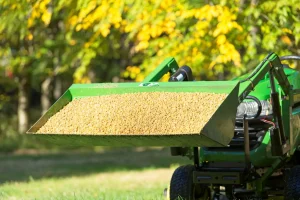
Shaft-driven tools are different. When you hook up compact tractor attachments to a rear PTO, the engine’s power transfers through solid steel. You can swap from a front-end loader moving mulch to a rear-mounted backhoe digging trenches in a matter of minutes.
Property Size and Terrain
Smaller mowers rule flat residential spaces. Their lighter weight protects delicate topsoil. They navigate tight landscaping with absolute ease.
Rough acreage requires physical weight. Weight gives you traction. If you want the best tractor for 5 acres of hilly land, a heavy diesel model is non-negotiable. It keeps tires planted and prevents rollovers.
We always advise looking at the total cost of ownership rather than just the initial sticker price. Gasoline turf machines cost less upfront. They fit residential budgets well. With good maintenance, they cut grass reliably for a decade.
Agricultural diesel machines require a larger initial investment. But they run for thousands of hours before requiring a major overhaul. Because they hold resale value so well in the used equipment market, a diesel machine is often cheaper to own over twenty years.
With decades of agricultural manufacturing experience, we at LGM USA design equipment for real-world terrain and serious property management. Our engineering prioritizes exact fits, not blind upselling. We know selling you the wrong machine ruins your land and wastes money.
By rigorously testing PTO assemblies, transmission housings, and high-pressure hydraulic systems in the harshest conditions, we ensure property owners get reliable, certified equipment without paying for unnecessary bulk. We test our equipment across diverse climates to guarantee that when you engage a differential lock or lift a heavy loader bucket, the machine responds perfectly. Our goal is helping you manage your property efficiently for decades.
Making the final call requires an honest assessment of what you actually intend to do on a daily, weekly, and seasonal basis. We use a simple framework to help you decide.
We usually tell folks to stick with a lighter, gas-powered machine if they fit a specific profile. Here is when buying a garden tractor makes the most sense for your property:
Use diesel power if:
Expert Pro Tip: The heavier weight of a diesel utility machine can cause significant turf damage on soft, wet lawns. Always evaluate your ground conditions and consider swapping industrial R4 tires for specialized turf tires if you plan to mow your front yard with a heavier machine.
Q. What exactly is a garden tractor?
A. It is simply a beefed-up riding mower. It has a stronger frame to handle light towing, but its main job is strictly cutting grass.
Q. What makes a compact tractor different?
A. It is a true, scaled-down farm machine. It runs on diesel, has hydraulics, and uses a heavy-duty hitch to lift real farm implements like plows and loaders.
Q. Can I use a garden tractor for farm chores?
A. No. If you try to move heavy dirt or do deep tilling with a mower, you will quickly burn out the transmission and snap the drive belts.
Q. Which one is the better deal?
A. If your only goal is a clean lawn, buy a garden tractor. If you manage rough acreage or need a loader, a compact tractor is cheaper over time because it actually survives the heavy work.
Q. Do I really need to spend the extra money on a compact tractor?
A. If you need to move gravel, plow heavy snow, or lift heavy pallets, yes. Buying a cheaper, lighter machine for heavy work just means you will end up having to buy it twice.
The decision comes down to your land’s true demands. If you need heavy ground engagement and lifting power, a belt-driven mower will disappoint you. Compare the latest LGM USA compact tractors today to find the exact match for your property needs.

© 2026 All Rights Reserved | LGM USA LLC
Added to cart
Check out our shop to see what's available