

The 2026 spring season is finally here. That means yard work is piling up. You ordered a bulk delivery of wood chips.
The truck dumped a huge mountain in your driveway and left. Now you are just staring at it. It looks like a whole weekend of heavy lifting.
We know the feeling. Moving large amounts of organic material the old-fashioned way translates to sore shoulders and aching backs.
Most people grab whatever rusty tools they have sitting in the garage. They pull out a squeaky wheelbarrow and a heavy metal digging shovel.
Professional landscapers tackle this completely differently. They cut the time in half by changing their gear and approach.
We want to show you exactly how the pros get this done. If you are trying to figure out how to move mulch faster, we will walk you through the actual gear, hauling hacks, and spreading tricks you need.
If you want to speed up chores, you have to look at what slows you down. Homeowners make the same mistakes every spring.
They rely on outdated equipment that fights against them. Using the wrong gear means burning twice the calories for half the results.
Standard single-wheel wheelbarrows are not built for hauling high volumes. They balance on one narrow tire. That makes them incredibly unstable the second you hit a small dip or tree root.
When they tip over sideways, you have to clean up the mess. They also hold very little volume, forcing dozens of unnecessary trips.
Stop using a regular digging shovel. They are meant for slicing through hard clay, not light wood chips. They are heavy and feature a narrow blade.
When you shove a digging shovel into a pile of bark, it barely grabs anything. You need a tool designed for volume, not for cutting dense earth.
The fastest way to move mulch is to use a high-capacity four-wheel garden cart or a heavy-duty tarp for flat terrain. Pair this with a 10-tine pitchfork for quick loading, and dump the mulch in small, evenly spaced piles before spreading it with a wide bow rake.
Upgrading your gear is the easiest way to buy back your time. We highly recommend swapping out the traditional setup.
A four-wheel wagon instantly solves the balance issue. The four wheels distribute weight evenly, so you never worry about tipping over on uneven turf.
If you upgrade to a heavy-duty garden cart, you can pile chips incredibly high. The wide base allows you to haul heavy payloads without spilling.
If your yard is flat, dragging a tarp is a time-saver. Lay a thick plastic tarp next to the driveway pile.
Rake the material directly onto the center. Then grab the corners and walk it across the grass. It slides with almost zero friction.
Got a big property? Put your riding mower to work. Hooking up a tow-behind cart eliminates physical pushing.
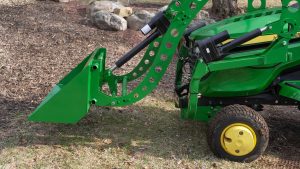
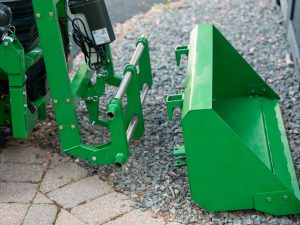
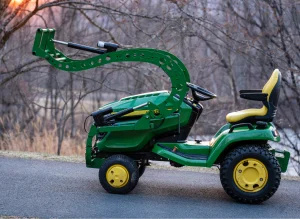
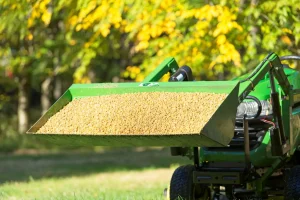
You can also invest in front-end lawn tractor attachments to scoop and dump large amounts in seconds. Let the engine do the heavy lifting whenever possible.
The tool you hold dictates your speed. If you ordered stringy bark, you must use a 10-tine pitchfork.
The metal tines slide perfectly into the tangled pile. The fork grabs a huge clump while leaving the heavy weight behind. For wet compost, grab a lightweight aluminum snow scoop instead.
Pro Tip from Our Equipment Team: Always use a 10-tine pitchfork instead of a shovel for stringy bark mulch; it grabs twice the volume with half the weight.
Having the right gear is only half the battle. You also need a smart game plan to prevent wasted movement.
You have to pull weeds and cut edge lines before the truck arrives. It is important to prepare garden beds for spring early in the week.
If you stop mid-haul to yank out a dandelion, you break your rhythm. A deep edge holds fresh material perfectly in place.
Talk to your delivery driver. Ask them to dump the pile as close to your garden beds as possible.
If they can back up onto the side lawn instead of dumping at the curb, you save hours of walking. Shortening your travel distance is the easiest hack.
Never spread material by hand straight out of your wagon. Drive your cart along the edge of the planting bed. Dump small piles every three feet.
Once empty, grab a stiff metal bow rake. Flip the rake upside down so the flat back edge touches the dirt. Push and level the small piles out into a smooth sheet.
| Tool | Capacity (Cubic Ft.) | Best Terrain | Physical Effort Level |
| Standard Wheelbarrow | 2-3 | Paved or Flat | High |
| Utility Wagon | 8-10 | Uneven or Sloped | Medium |
| Heavy Tarp | 5-7 | Flat Grass | Low |
We want you to finish chores without needing ice packs the next day. Protecting your joints is crucial.
Lift with your legs, not your back. Bend your knees, keep your spine straight, and let your thigh muscles push upward.
When you scoop a heavy load, do not twist your waist. Twisting under tension causes back injuries. Pivot your feet and step toward your cart instead.
This is a marathon, not a sprint. You will sweat out a lot of water pushing heavy loads across the grass.
Take a five-minute break in the shade every hour. Drink water before your mouth gets dry. Pushing to the point of exhaustion leads to sloppy form and dropped loads.
We know what it takes to maintain a property because we design the equipment that makes it happen. At LGM USA LLC, we have spent decades manufacturing heavy-duty agricultural and utility gear.
We understand the physical toll yard maintenance takes on homeowners and professionals. Our core mission is to engineer practical, durable, labor-saving solutions that actually work in the soil.
We do not just build equipment; we put it through brutal real-world testing. We load our carts with wet compost, drag them over rutted terrain, and push our gear to the limit.
When we recommend a hauling technique, it comes from thousands of hours of hands-on experience. We know the exact physics and volume capacities required to move bulk materials efficiently.
You can trust our insights because we build the tools the landscaping industry relies on.
Getting that huge pile off your driveway does not have to be a miserable experience. Ditching the traditional wheelbarrow for a high-capacity wagon instantly speeds up the process.
Utilizing the right hand tools makes loading a breeze. We highly recommend the dump-and-rake method to save your knees.
It is time to upgrade your approach for 2026. Grab the proper gear, pace yourself, and get the job done right.
Q. What is the fastest way to move mulch?
A. If you want to get it done fast, rent a skid steer or mini track loader. If we have to move it by hand, we always grab a heavy-duty four-wheel cart or drag it on a thick plastic tarp across flat grass.
Q. Is a wheelbarrow the best tool for moving mulch?
A. Not at all. Standard wheelbarrows tip over easily on uneven ground and simply don’t hold enough. We highly recommend a four-wheel utility wagon instead for better stability and much larger loads.
Q. Should I use a shovel or a pitchfork to move mulch?
A. If you ordered stringy wood chips, grab a 10-tine pitchfork. It slides right in and grabs huge clumps without the heavy metal weight. We only use a shovel or scoop for finer dirt and compost.
Q. How can I move mulch faster across a flat lawn?
A. Use the tarp trick. Shovel the pile directly onto a heavy-duty plastic tarp, grab the corners, and drag it across the grass. It saves us a ton of heavy lifting and cart pushing.
Q. What is the “dump and rake” technique?
A. Never spread it directly by hand. Dump small, spaced-out piles along your garden bed. Then, flip a metal bow rake upside down and use the flat back edge to push and level the piles into a smooth sheet.
Q. How deep should I spread my mulch?
A. We aim for exactly two to three inches. If you put down too much, you smother the plant roots. If you go too thin, weeds will push right through by next month.
Q. Do I need to prep my garden beds before mulching?
A. Absolutely. Pull the weeds, clear out old debris, and cut a clean edge first. We also put down a pre-emergent weed preventer before dumping the fresh layer so we don’t have to pull weeds later.
Q. Should mulch touch the base of my trees or plants?
A. Keep it a few inches away from the trunks and stems. Piling it up against the bark traps moisture and almost always leads to rot, bug infestations, and disease.
Q. When is the best time of year to lay mulch?
A. We find late spring is best for locking in summer moisture. Early fall is our second choice if we need to insulate the roots against freezing winter temperatures.
Q. How can I reduce physical strain when moving mulch?
A. Rely on four-wheel carts so you don’t have to carry the weight. Lift with your legs, bend your knees, take breaks in the shade, and drink water long before you actually feel thirsty.

© 2026 All Rights Reserved | LGM USA LLC
Added to cart
Check out our shop to see what's available