

You’re about to spend real money on something that bolts onto a tractor you already own. Before you click buy, it’s reasonable to want to know what happens if it shows up and the box looks rough, or it doesn’t fit your X300 the way you pictured, or six months from now something stops working the way it should.
That’s what this page is for. No fine print, no fluff. Just plain English about how returns, warranty, and support actually work when you buy an LGM-100, and what we’d want you to know if you were our neighbor asking about it across the fence.
Most of the questions we get before someone orders an LGM-100 fall into three buckets. We’ll handle them in order.
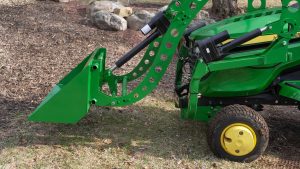
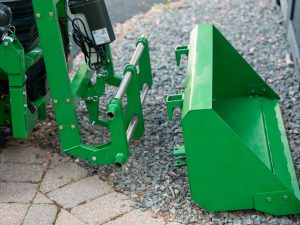
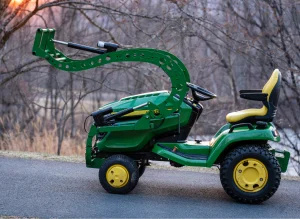
The LGM-100 is built specifically for the John Deere X300 and X500 series. That’s the whole design brief. It’s not a universal loader trying to fit fifty different machines. It mounts to the tractor you already own, with the brackets and hardware made for that frame.
If you have an X300 or X500 in your garage, you’re in the right place. If you have something else (an X700, a Z-series zero turn, a different brand entirely), the LGM-100 is not for you and we’ll tell you that up front. We’d rather lose a sale than send you a loader that won’t bolt on right.
Not sure where your tractor falls? The model number is on the dash or on the frame near the seat. If you can’t find it, send us a photo and we’ll tell you. Easier to ask before you order than after.
This one is rare with the LGM-100 because we engineered the kit around two specific tractor families. But mistakes happen. Maybe your tractor turns out to be a model we don’t support. Maybe you tried mounting it and something doesn’t line up. Maybe it shows up and you realize the project you had in mind isn’t going to work the way you thought.
If any of that happens, you’re not stuck with it. You contact us, we walk through what’s going on, and we figure out next steps together. Sometimes the fix is a phone call (we hear a lot of “oh, that bracket goes there” moments). Sometimes it’s a return.
For the specific return window, condition requirements, and any restocking or shipping fees, check the policy on the order page or your receipt before you ship anything back. Our goal is simple: nobody ends up with an expensive box in their garage they can’t use and can’t return.
The LGM-100 is built to take the kind of work a homeowner puts on it. Moving mulch on Saturday, pushing snow in January, hauling firewood from the back of the property in the fall. It’s designed for that life.
But mechanical things sometimes fail. An actuator can have a bad component from the factory. A weld can fail on a part that should have been stronger. A wire can come loose. If something like that happens, check the warranty page on lgmusa.com for the current terms before you ship anything back. The current LGM-100 warranty covers manufactured parts (non-electrical) for 3 years of normal residential use, and electrical components for 2 to 3 years depending on the part, with full replacement cost including shipping for covered items. More on what’s covered and what isn’t a few sections down.
If you’ve ever returned something to a big-box store, you know the drill. You stand in line. You hand them a receipt. They scan a barcode. They give you a refund or store credit. It’s fast because they sell millions of identical units.
Returning a piece of equipment like the LGM-100 doesn’t work that way, and we wouldn’t pretend it does. There’s a loader, mounting hardware, an actuator, a wire harness. It got shipped on a pallet. You can’t just walk it back into a store.
Here’s how it actually goes:
For the specific return window and any conditions, look at the policy that came with your order or call us.
The thing we want you to take away from this section: there is a real person on the other end of the phone or email. You’re not filing a ticket and waiting two weeks to hear back from a system. You talk to someone who knows the product.
Every warranty document ever written sounds like it was drafted by a lawyer in a dark room. Here’s what ours actually means in practice.
The LGM-100 warranty covers defects in materials and workmanship. That means if a part fails because it was made wrong, assembled wrong, or used a bad component, we make it right. Repair, replacement, or refund depending on the situation.
Examples of what’s covered:
For the exact warranty length and any specifics on parts versus labor, check the warranty card that came with your loader, the product page, or your receipt.
Warranties don’t cover the things that wear out from normal use over time. That’s true of every warranty on every product, and we treat it the same way. Pivot pins eventually need grease. Paint scuffs when you scrape a curb. Bushings wear in a little. None of that is a defect; it’s just what happens when a tool gets used.
Same goes for damage from misuse. If you tried to lift a 600 pound rock with a loader rated around 320 pounds, that’s on the operator, not the warranty. If you skipped greasing the fittings for two seasons and the pins seized up, that’s a maintenance issue. We’re not trying to be jerks about this; we’re just being straight that a warranty is for things we got wrong, not things that got worn out or pushed past spec.
Same drill as a return. Don’t try to ship anything back or take the loader apart yet. Pick up the phone or send us an email. Describe what happened and send a couple photos if you can. We’ll figure out from there whether it’s a part you need shipped, a fix you can do in the driveway, or a full claim.
The faster we can see what’s going on, the faster we can do something about it.
You can reach us by phone, by email, or through the contact form on the site. Whichever is easier for you. None of them go to a bot.
A few things that make it easier on both sides:
You’ll get a real person who knows the product. We’re not a giant operation. The same folks who answer the phone are the ones who know how the thing goes together. That’s part of what makes the support side actually work.
If you ordered recently and want to understand the rest of the journey, we wrote up the full shipping and delivery process here. That covers what to expect from the moment you click buy until the loader is in your driveway.
This is the part most companies won’t tell you, but it’ll save you time.
A surprising number of “this isn’t working” calls turn out to be small things. A connector that didn’t fully seat. A bracket installed in the wrong spot. A breaker that tripped and just needs to be reset. The actuator that’s making a clicking noise because there’s a wire pinch we can talk you through finding in five minutes.
Before you decide to box up the loader and ship it back, give us a call. There’s a decent chance whatever’s going on is fixable in your driveway with a phone in your hand and a screwdriver. We’ve helped a lot of homeowners turn a planned return into a working loader by walking through the install one more time together.
That’s not a stalling tactic. We’re not trying to talk you out of a return you actually need. We’re saying that if you’re frustrated and ready to send it back, ten minutes on the phone first is worth it. Worst case, you still send it back. Best case, you spend Saturday using it instead of packing it.
If you want a second set of eyes on whether your setup is right before something goes wrong, we also offer a remote inspection service where you walk us through the install over video. Catches a lot of small things early.
Spending real money on a tool you’ve never owned before is a decision. It should be. We’d rather you take ten minutes to read this page and feel sure about the purchase than click buy in a hurry and feel uneasy about it the whole time you’re waiting for it to ship.
Here’s what we want you to walk away with:
If you already own a John Deere X300 or X500 and you’ve been thinking about whether the LGM-100 is the right add-on for your weekend projects, take a look at the LGM-100 product page. Read the spec sheet. Look at the mounting photos. Then call us if you want to talk through whether it’s the right fit for your yard before you order.
Your tractor can do more than cut grass. We built the LGM-100 to make that easy, and we built the support side around the same idea. Make your tractor actually useful, and know we’re here if anything comes up along the way.
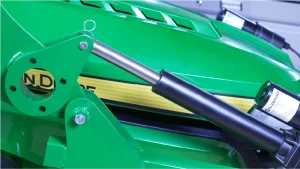
The warranty covers defects in materials and workmanship, with a focus on structural steel components and the linear actuator. It ensures the loader is protected against manufacturing issues from the time of purchase.
Electrical issues caused by manufacturing defects are supported through technical diagnosis and replacement of faulty components. This helps restore the loader to full working condition with minimal downtime.
Customers can return unused products within the defined return window if they are in original packaging. Terms may apply regarding shipping costs and restocking fees depending on the condition and timing.
Claims are often verified using photos or videos submitted by the customer. This remote assessment speeds up the approval process and reduces the need for physical inspections or shipping parts.
A strong warranty demonstrates confidence in the product’s build quality. It assures customers that the LGM-100 is designed for long-term durability under regular heavy use.


© 2026 All Rights Reserved | LGM USA LLC
Added to cart
Check out our shop to see what's available