
Upgrading your garden tractor with a front-end loader is one of the best investments you can make for your property. But choosing the wrong lift system often leads to endless, frustrating maintenance headaches.
If you are tired of dealing with messy hydraulic fluid leaks, complex hose routing, or underpowered lifts, you are definitely not alone. We hear these exact complaints from property owners every single week.
Traditional hydraulics have ruled the market for decades. For a long time, they were the only viable option. But the industry has shifted dramatically.
By 2026, electric actuators will be rapidly becoming the most popular choice for home tractors. The gear has gotten so much better lately, giving property owners a clean, reliable setup that totally skips the messy fluid.
This breakdown tells the key differences between electric and hydraulic front-end loaders. We will compare lifting capacity, maintenance, installation complexity, and long-term costs.
Purchasing an attachment system is a significant investment. Getting it right means more time working in the yard and considerably less time wrenching in the garage.
Quick Answer Box: The main difference is power. Electric loaders use battery-powered actuators, they bolt on fast, never leak, and need almost zero maintenance, making them perfect for residential tractors. Hydraulic loaders use pressurized fluid and cylinders. They require more upkeep but deliver the raw lifting power needed for heavy commercial jobs.
To understand which system is right for you, we first need to look at how these attachments actually generate their lifting power. The mechanisms behind them are completely different.
Traditional hydraulic loaders rely entirely on fluid-based power delivery. This is the old-school method that has powered heavy machinery for over a century.
A high-pressure hydraulic pump forms the heart of the system. This pump forces thick, specialized hydraulic fluid through a series of reinforced hoses.
Fluid flows into heavy-duty hydraulic cylinders. The fluid fills the cylinder chamber and pushes a solid metal rod out. This lifts the loader bucket.
This setup provides immense brute force. It is the exact reason massive construction equipment can lift tons of earth without breaking a sweat.
However, that power comes at a steep cost in terms of complexity. A hydraulic system requires a massive web of hoses, pressure relief valves, directional control valves, and a reservoir to hold the fluid.
Every single connection point in that system is a potential failure point. Maintaining consistent fluid pressure is absolutely critical. If a seal degrades or a hose gets pinched, the entire system loses power and leaves you stranded with a bucket full of dirt.
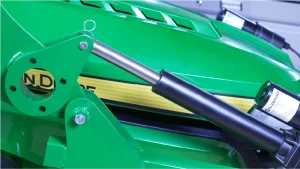
Electric models take a completely different, modernized approach. They employ electric actuators, powered by batteries, to lift with accuracy without fluids.
Instead of a complicated fluid pump and messy hoses, an internal electric motor drives a heavy-duty screw mechanism. As the motor turns, the screw smoothly extends and retracts the lift arms.
This technology provides power in a straight line directly from your tractor’s existing 12-volt electrical system. It is a very efficient, direct transfer of energy.
Because there is absolutely no fluid involved, the system is completely self-contained. The internal components of a modern electric actuator are sealed against the weather, making them incredibly resilient.
Now in 2026, the electric motors used in these actuators are more powerful and efficient than ever before. They draw minimal amperage, meaning they will not drain your standard lawn tractor battery during normal yard work.
When choosing an attachment, you have to match the tool strictly to the task. Let’s look at how these two very different technologies compare in real-world scenarios.
Hydraulic systems are superior for heavy material handling and mandatory for full-sized farm tractors.
Commercial hydraulics can lift over 2,000 pounds and are perfect for moving large hay bales, loading dump trucks, and digging hard clay.
Conversely, electric front-end loaders are perfectly optimized for residential yard work like moving mulch, topsoil, firewood, and gravel.
Most electric loaders safely lift a few hundred pounds, more than enough capacity for the average property owner.
A good electric loader easily moves double or triple the volume of a standard wheelbarrow with zero physical strain on your back.
Hydraulic maintenance is a constant, expensive chore requiring routine fluid checks, filter changes, and inevitable leak repairs.
If a seal blows while working, you face a messy, toxic fluid spill that can easily destroy your lawn.
Conversely, electric actuators are virtually zero maintenance. There are no fluids to check, filters to replace, or hoses to crack in freezing weather.
This reliability is a big advantage for property owners. Proper maintenance involves keeping the unit clean and occasionally checking your battery terminals.
Mounting a hydraulic loader requires invasive modifications, often forcing you to tap directly into the tractor’s transaxle for fluid pressure.
Without built-in auxiliary ports, you must install a secondary pump. The work is hard, involving making brackets, routing belts, and plumbing complex high-pressure hoses.
Electric attachments, on the other hand, are refreshingly simple to install, using a plug-and-play method.
The wiring harness safely connects to your tractor’s battery via standard ring terminals, utilizing an inline fuse and a simple dashboard toggle switch.
Following a standard tractor attachment installation guide, mounting an electric unit takes under an hour using only basic household hand tools.
One of the biggest mistakes we see buyers make is drastically overestimating their capacity needs. Many homeowners assume they need commercial-grade hydraulic power to move a pile of woodchips.
Buying a hydraulic system for light weekend chores is like buying a semi-truck to commute to an office job. It is unnecessary overkill that brings a host of heavy maintenance burdens you do not need.
Another common error is ignoring the physical dead weight of the attachment itself. Hydraulic loaders are incredibly heavy pieces of steel. Mounting one on a standard lawn tractor can overload the front axle and eventually destroy your steering components.
Electric loaders are manufactured to be much lighter. They are engineered specifically for the strict weight tolerances of residential garden tractors.
When comparing tractor attachments, real-world performance is the only metric that truly matters. Spec sheets are great, but they do not tell you how a loader actually handles a load of wet topsoil on a muddy, slippery incline.
At LGM USA, we leverage decades of hands-on experience in lawn and garden equipment manufacturing. We engineer targeted solutions that actually solve real homeowner problems.
We do not just aggregate specs or write about these attachments from a clean desk. Our engineering team builds, tests, and heavily tortures these systems on the same John Deere and Husqvarna tractors sitting in your garage right now.
We know exactly what these machines can and cannot do. Our customer-first mission ensures you always get transparent, highly accurate performance data. We refuse to rely on generic marketing fluff.
We build dependable equipment that works exactly as hard as you do, eliminating the frustrating, costly downtime associated with traditional tractor maintenance.
Making the final decision comes down to taking a very honest look at your property size and your daily operational workload.
For the typical homeowner, an electric loader is undoubtedly the superior, smarter choice. The combination of easy installation, low dead weight, and zero routine maintenance makes it a perfect, stress-free fit.
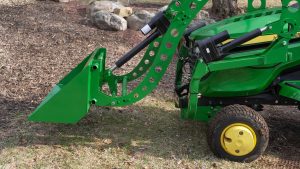
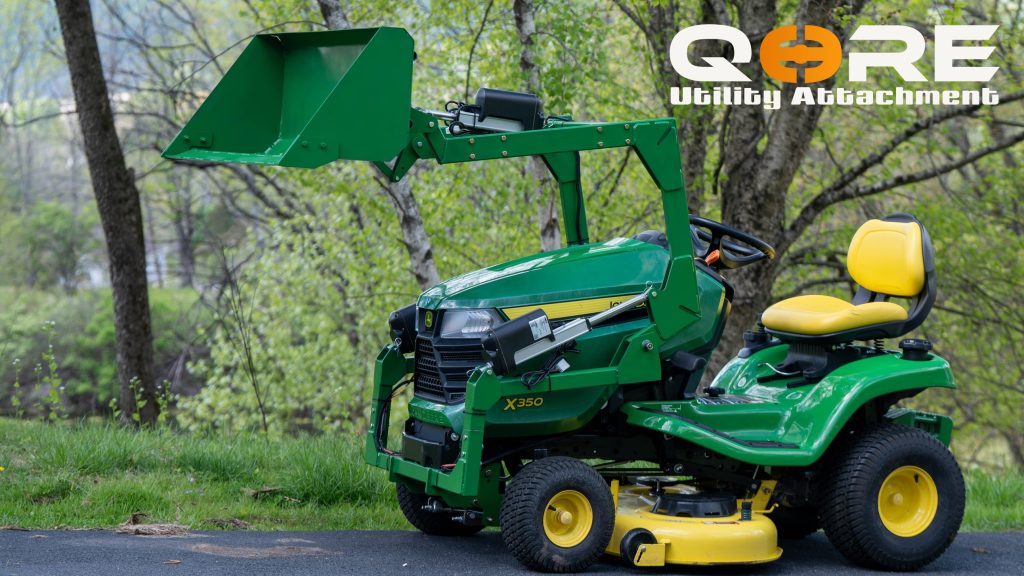
If you are looking to seriously upgrade your mower, finding a reliable John Deere X300 loader attachment utilizing electric actuators will transform how you manage your yard. It provides the necessary muscle for weekend landscaping projects without the overhead of a heavy, leaky hydraulic setup.
For sustained, high-weight commercial farming applications, a hydraulic loader attachment remains entirely unbeatable. There is simply no substitute for fluid power when dealing with huge, industrial weights.
If you run a 50-horsepower diesel tractor and need to move round hay bales, load heavy pallets of fertilizer, or excavate hard-packed earth on a daily basis, hydraulic power delivery is 100% essential.
If you plan to use your loader for winter snow removal, electric actuators offer a big hidden benefit. Hydraulic fluid gets incredibly thick and viscous in freezing temperatures, leading to very sluggish operation until the fluid eventually warms up. Electric actuators provide instant, full-speed lifting power the second you flip the switch, regardless of how bitterly cold it is outside.
Q. Do Electric Front-End Loaders Require Less Maintenance?
A. You bet. Since there are no messy fluids, mechanical pumps, or fragile rubber hoses, you don’t have to worry about tracking down leaks. Honestly, your only real maintenance job is making sure your tractor’s battery stays charged.
Q. Are Hydraulic Loaders Stronger Than Electric Loaders?
A. Hands down, yes. Fluid power generates way more lifting muscle and breakout force. If you work in heavy construction or run a commercial farm, hydraulics are still the only way to go.
Q. Which Loader Is Easier To Install On A Lawn Tractor?
A. Electric loaders win this one easily. You just run a basic wire harness straight to your 12-volt battery. You get to skip all the frustrating hydraulic plumbing, and you won’t need to tear apart your transmission.
Q. Can An Electric Loader Drain My Tractor’s Battery?
A. Not if your tractor is running properly. Today’s actuators pull very little power. As long as your engine is on and the factory alternator works, the charging system handles the loader’s short power draws without breaking a sweat.
Q. Are Electric Loaders Safe To Use In The Rain Or Snow?
A. Yes, they are. The actuators on high-quality electric models come completely sealed off from the weather. They have strict waterproof ratings, so you can keep working through rain, deep snow, and thick mud without stressing out.
Q. What Is The Maximum Weight A Residential Electric Loader Can Handle?
A. It really depends on the loader itself and the size of your tractor frame. That being said, most residential yard electric setups are designed to safely lift between 200 and 400 pounds continuously.
Choosing between electric vs hydraulic front-end loaders ultimately comes down to your specific daily workload and your personal tolerance for ongoing maintenance.
For commercial farming and heavy construction, hydraulics will always win the battle of raw lifting power. But for residential property owners wanting a clean, highly reliable, and incredibly easy-to-install solution for their garden tractors, modern electric actuators are the undisputed smarter choice.
You no longer have to struggle with a heavy wheelbarrow or ruin your hard-earned weekend cleaning up spilled, toxic hydraulic fluid. It is time to work smarter, not harder, on your property.
Take a look at our current lineup of electric loaders, or give our crew a call. We’ll work closely with you to figure out the exact setup your tractor needs so you can finally knock out those heavy yard chores.
What tractor are you currently running in your shed, and what exact materials do you need to lift? Contact https://lgmusa.com/ for expert guidance and to find the perfect electric loader attachment designed specifically for your machine.


© 2026 All Rights Reserved | LGM USA LLC
Added to cart
Check out our shop to see what's available