
Quick Answer: A motorized tractor bucket handles heavy landscaping much faster, holding up to five times more weight and protecting your lower back from intense strain. However, a traditional garden cart is still the best option for tight gate clearances and small, simple garden beds.
Moving piles of dirt, gravel, or dark mulch by hand can easily break your back and ruin a perfectly good weekend. When you look at the raw reality of a front-end loader vs. a wheelbarrow for home projects, the real issue comes down to human stamina and time.
Shoveling until your arms give out is a project killer. We have all been there, staring at a giant mound of topsoil delivered to the driveway, wondering why we did not hire a professional crew.
Manual tools are cheap, but they demand a large amount of physical energy. Modern tractor attachments are completely changing how we handle major yard renovations across our properties in 2026.
If you have a medium or large yard, moving material entirely by hand can take days. Mechanized options are becoming more affordable and accessible for everyday homeowners who want to work smarter.
We want to walk you through the honest pros and cons of both tools based on real field experience. We will look at raw carrying capacity, total project speed, physical toll, and actual out-of-pocket costs to find your ideal match.
Before we get to how they perform in the dirt, let us get down to the simple definitions. Knowing exactly what each machine brings to the table keeps your expectations realistic.
A classic garden cart relies entirely on your own muscle power to lift, balance, and push. It uses a single front tire, two wooden or steel handles, and a steel or heavy plastic basin.
Most residential versions carry about two to three cubic feet of loose material. If you load it down with heavy clay or river rock, balancing it becomes an immediate safety hazard. One small rock under the tire can flip the whole thing over instantly.
These basic tools shine brightest when working in small, enclosed spaces. Think about tight backyard gardens, narrow walkways alongside the garage, or small mulch touch-ups around individual trees. They are cheap, reliable, and require almost zero storage space.
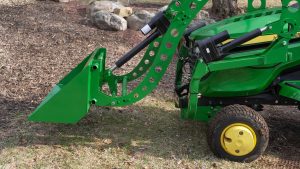
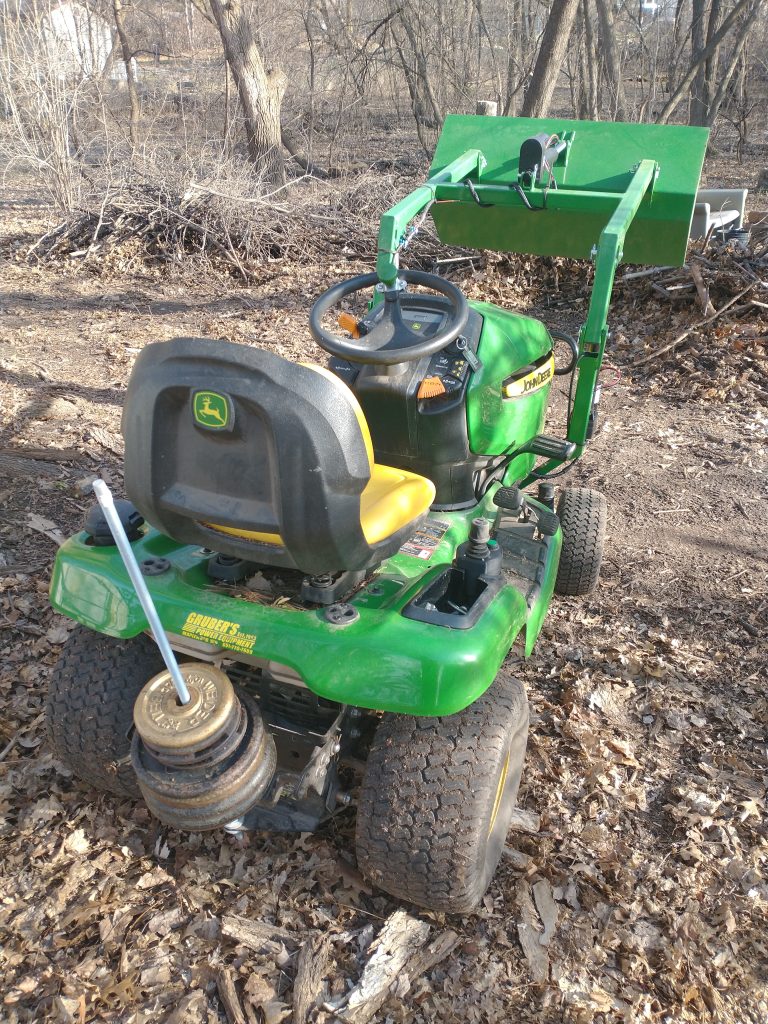
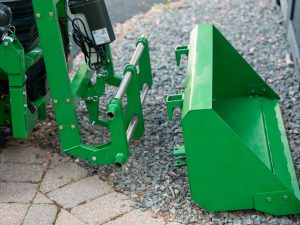
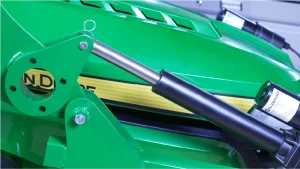
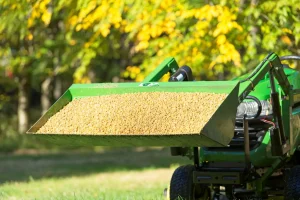
This tool is a heavy-duty steel bucket that mounts directly onto the front frame of a lawn tractor or compact tractor. It utilizes the machine’s onboard hydraulic pump to lift and tilt heavy materials with ease.
A standard attachment carries anywhere from 200 to over 500 pounds in a single scoop. The volume capacity easily hits five to ten cubic feet, completely eclipsing manual tools.
You use these attachments for major property maintenance, grading driveways, or clearing land. They turn massive, multi-day hauling chores into quick, stress-free morning tasks. If you own a large property, a loader changes the entire scope of what you can build.
Let us look at the actual numbers because data tells the real story when you are staring down a mountain of gravel. The difference in material handling efficiency is massive.
A manual cart tops out at roughly two or three cubic feet before it becomes too heavy for a normal person to balance safely. A tractor bucket handles double or triple that volume without breaking a sweat.
Think about moving a single cubic yard of heavy river rock. If you use a manual cart, you will have to make 9 to 14 exhausting trips back and forth across your grass.
A compact tractor bucket cuts that down to just 3 to 5 quick trips. You spend far less time walking back and forth, which keeps your lawn from getting trampled into a muddy track.
| Tool Type | Average Weight Limit | Power Source | Property Size | Strain Level |
| Manual Cart | 150 lbs max | Human muscle | Under 0.5 acre | Extremely High |
| Tractor Bucket | 200 – 500+ lbs | Hydraulic pump | Over 0.5 acre | Extremely Low |
Lifting a heavy manual cart puts intense pressure straight on your lower spine, shoulders, and wrists. If your yard has any slope, pushing that weight uphill will wipe out your energy in less than an hour. Many articles completely ignore the long-term medical costs of thrown-out backs and torn muscles caused by manual labor.
Using hydraulic levers completely shifts the hard work away from your body and puts it onto a steel frame. You sit comfortably in a padded seat while pushing a simple joystick to lift hundreds of pounds of wet dirt.
Our team notices that people who switch to mechanized power finish their days without feeling completely broken down. It allows a single person to act as an entire landscaping crew with zero physical exhaustion.
Shoveling material into a cart, pushing it across the yard, and dumping it by hand takes several minutes per trip. Your pace naturally slows down as your muscles get tired and hot during a long afternoon.
A tractor operator uses the edge of the steel bucket to scoop material directly out of a pile. This removes the slow, painful step of manual shoveling entirely.
The time savings add up incredibly fast over a large project. For instance, spreading 10 cubic yards of topsoil by hand easily consumes a full weekend of hard labor.
By switching to a dedicated tractor setup, you can complete the same task in under three hours. This leaves you with plenty of free time to enjoy the rest of your weekend.
Lifting power is fantastic, but it does not mean anything if your machinery cannot physically get to the job site. You have to consider your specific property layout and financial boundaries.
This is where the manual cart takes the crown every single time. A single tire allows you to spin the cart on a dime, roll through standard 36-inch walk-gates, and thread between delicate prize bushes.
Tractors are wide, heavy, and require a wide turning radius to operate safely. If your backyard is fully fenced with narrow entry gates, a front-end loader cannot get back there without destroying the fence lines.
If your yard is full of exposed tree roots, thick mud, or steep hills, a manual cart becomes a nightmare to handle. Pushing a single tire through soft sand or wet mud requires immense physical strength and often results in the cart tipping over.
Tractors have wide, deep tread tires and heavy engines that dig into loose terrain with ease. They scale steep hills and crawl through deep mud without losing their grip or spilling their load.
A brand-new steel manual cart costs under $200 at any local home improvement store. It lasts for decades with basic care, making it an incredibly cheap option for casual gardeners.
A tractor attachment requires a significant financial commitment, often running between $1,500 and $4,000. That cost also assumes you already own a tractor that can support hydraulic lines. However, if you have a large property to manage regularly, the massive time savings and saved medical bills make the investment worth every penny.
Making the final choice depends entirely on the size of your yard, your project goals, and your physical health. Let us break down the exact scenarios for both tools.
Stick to manual carts if you manage a small suburban property under a half-acre. If your yard work mostly consists of planting small annuals, refreshing small flowerbeds, or moving a few bags of potting soil, heavy machinery is unnecessary overkill.
If your property stretches over a half-acre, you almost certainly need a tractor setup. The long walking distances make manual hauling a huge waste of time.
Any property owner who regularly orders bulk deliveries of gravel, sand, or heavy stone needs mechanized help. If you spend every spring moving mulch by the truckload, an attachment will save your back and cut your project times in half.
Our dedicated team at LGM USA LLC knows exactly how brutal property maintenance can be on the human body. We carry extensive years of direct manufacturing experience in the lawn and garden equipment industry, allowing us to build solutions that actually work.
We don’t believe in flimsy, disposable tools that break down after a single season of hard use. We engineer rugged, American-made equipment designed to withstand heavy-duty work and increase your efficiency.
Everything we make is designed and built with the customer in mind for operator safety, structural integrity, and dependable hydraulic power. We test our gear in real-world mud and gravel so you can rely on it completely when working on your own land.
Q. Is a front-end loader better than a wheelbarrow?
A. Yes, for properties larger than half an acre or projects involving tons of bulk material, a tractor loader is vastly superior. It speeds the movement of material. It eliminates human fatigue.
Q. How much more material can a tractor bucket move?
A. A standard tractor bucket carries 200 to 500 pounds easily. This is roughly three to five times what an average person can safely handle in a standard manual cart.
Q. Should I keep a manual cart if I buy a tractor setup?
A. Yes, manual carts are still great for ultra-tight spaces, delicate flower gardens, and quick touch-ups where a tractor bucket is too large to fit safely.
Q. Can I put a loader attachment on a basic riding mower?
A. No, standard residential riding mowers do not have the heavy frame or the hydraulic pumps needed to operate a lifting bucket safely. You need a dedicated garden tractor or sub-compact machine.
Q. Is it hard to learn how to operate hydraulic tractor controls?
A. Not at all. Most owners get comfortable with the basic joystick movements within a couple of hours of practice in an open, flat field.
Deciding between a front-end loader and a wheelbarrow comes down to an honest look at your property size, your budget, and your own physical limits. Manual carts are cheap and great for tight corners, but they demand peak physical exhaustion for big jobs. Upgrading to a tractor attachment completely changes how you manage your land by multiplying your speed and protecting your spine.
Look at your long-term property goals before spending your hard-earned money. If you are ready to stop breaking your back and reclaim your weekends, take a close look at our heavy-duty tractor attachments to upgrade your yard work capabilities today.

© 2026 All Rights Reserved | LGM USA LLC
Added to cart
Check out our shop to see what's available