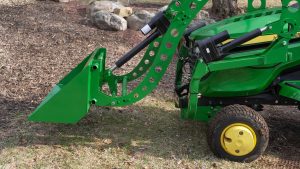

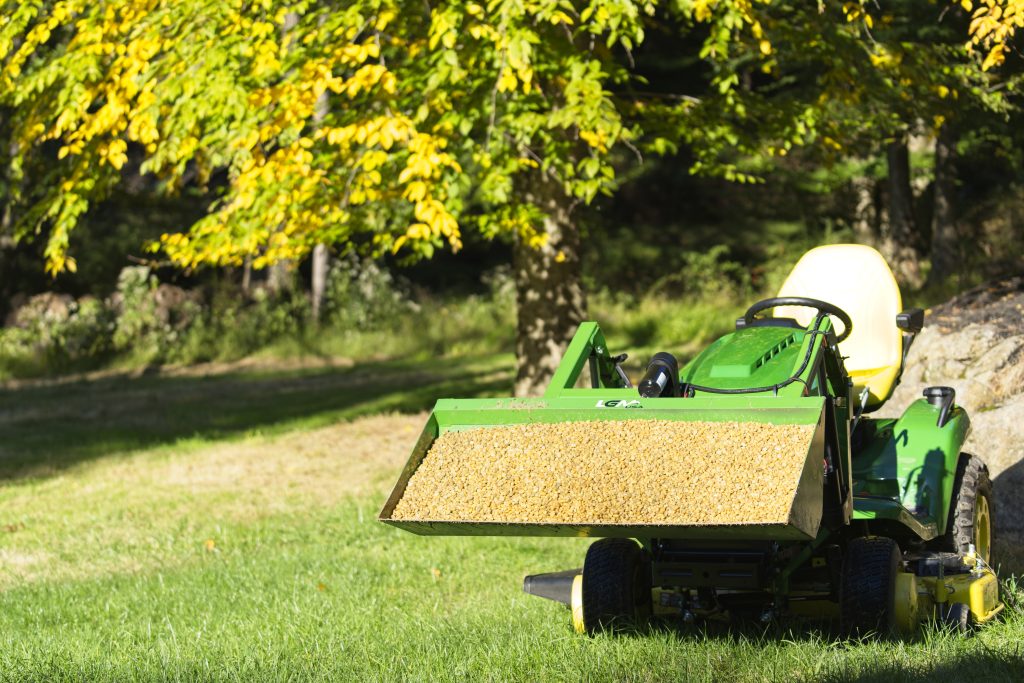
A ride on mower represents more than a grass cutting tool for many American homeowners. It represents opportunity. Owners look at their John Deere and recognize its potential to move mulch, distribute gravel, prepare outdoor living spaces, and manage seasonal snow efficiently. The desire to expand capability has existed for decades, yet one barrier consistently limited that ambition.
That barrier was hydraulics.
Hydraulic systems introduced complexity, cost, and maintenance demands that exceeded what most residential owners required. As of 2026, advancements in electric loader technology have reshaped this conversation. Electric front end loaders such as the LGM 100 have demonstrated that modern residential equipment can deliver reliable lifting performance without the burden of hydraulic infrastructure.
For homeowners evaluating loader options for John Deere X300 and X500 series tractors, this guide explains why electric systems now represent the preferred solution for residential property management.
Hydraulic loaders remain the standard for agricultural and commercial machinery. On high horsepower tractors operating across large acreage, hydraulic systems provide unmatched lifting speed and capacity. Their effectiveness in that environment remains unquestioned.
Residential garden tractors operate within a different scope. Properties ranging from one to five acres require versatility rather than industrial output. When hydraulic systems are adapted to garden tractors, several structural challenges arise.
Most garden tractors do not include factory hydraulic ports. Retrofitting hydraulics requires installing pumps, reservoirs, valves, and high pressure hoses throughout the machine. This process introduces complexity that exceeds typical homeowner expectations.
Hydraulic pumps draw continuous power from the engine. On garden tractors with engines in the eighteen to twenty four horsepower range, this demand affects overall performance. Power diverted to hydraulics reduces available output for traction and mowing.
Hydraulic systems require fluid management, seasonal servicing, and hose inspection. Residential environments amplify the impact of leaks due to proximity to lawns, driveways, and finished surfaces.
For residential lifting requirements involving mulch, gravel, snow, and soil, hydraulic systems exceed functional needs and introduce operational overhead that homeowners increasingly prefer to avoid.
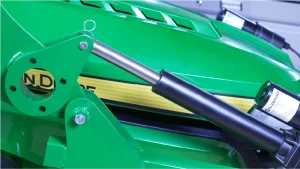
Electric loader technology has matured significantly. The LGM 100 utilizes electric linear actuators designed specifically for residential tractor platforms. This approach delivers controlled lifting force using the tractor’s existing electrical system.
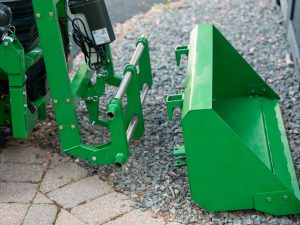
The LGM 100 connects directly to the tractor’s twelve volt electrical system. Installation involves mechanical mounting and plug and play wiring. Pumps, reservoirs, and hydraulic lines are eliminated.
Homeowners complete installation within a single day using standard tools. The process transforms an existing mower into a capable material handling machine without specialized mechanical training.
Electric actuators operate with minimal sound output. This characteristic supports early morning and residential neighborhood use. Snow clearing, landscaping preparation, and driveway maintenance proceed without excessive noise impact.
Electric actuators deliver smooth, consistent motion. Lift and dump cycles operate at a measured pace that supports precision placement of materials. This control proves valuable when working near landscaping, hardscaping, and finished surfaces.
The LGM 100 provides a rated lift capacity of approximately three hundred fifty pounds, aligning closely with residential material handling requirements.
Hydraulic loader installations represent a significant investment. Aftermarket hydraulic systems commonly exceed several thousand dollars before labor costs. Long term ownership adds recurring maintenance expenses.
Electric loaders reduce initial investment by leveraging existing electrical systems. Ownership costs remain low due to sealed actuators and the absence of fluid management. Electric systems operate using power generated during normal engine operation.
For homeowners evaluating return on investment, electric loaders deliver consistent value without ongoing service demands.
Lift capacity ratings translate directly into common residential tasks.
Mulch distribution involves moving multiple cubic feet per load. Electric loaders support efficient transport and controlled placement.
Gravel maintenance requires lifting dense material. Electric actuators provide consistent torque while preserving traction.
Snow relocation benefits from bucket volume and stacking capability rather than pushing alone. Electric loaders reposition snow effectively without reliance on throwing distance.
Topsoil movement transforms large delivery piles into manageable projects completed within realistic timeframes.
These use cases reflect typical homeowner workloads rather than industrial expectations.
Electric loaders rely on the tractor’s weight for traction. Accessories such as tooth bars improve soil engagement by breaking surface resistance. This enhancement allows electric loaders to perform light digging tasks with improved efficiency.
With appropriate attachments, electric front end loaders expand from transport tools into versatile material handling systems.
Outdoor property use continues to evolve. Homeowners increasingly invest in outdoor rooms, raised garden beds, gravel patios, and integrated landscaping features. These projects require consistent material movement and placement.
Electric loaders align with these trends by supporting frequent, small scale projects without requiring contractor involvement. Homeowners gain scheduling flexibility and long term capability.
Electric actuators maintain consistent operation across temperature ranges. Cold weather performance remains reliable without warm up requirements. Snow clearing proceeds immediately when conditions demand prompt action.
Sealed electric components resist corrosion caused by road salt and winter moisture, supporting longevity in northern climates.
Electric actuators function as sealed mechanical units. Replacement involves straightforward unbolting and installation if required. No fluid bleeding or system flushing is involved.
Residential equipment ownership benefits from predictable maintenance requirements and reduced downtime. Electric loaders align well with this expectation.
Electric front end loaders represent a practical advancement for residential property owners. They deliver sufficient lifting capability, simplified installation, controlled operation, and reduced ownership complexity.
For homeowners managing landscaping, snow removal, and material transport on garden tractors, electric loader systems such as the LGM 100 provide a balanced solution. They extend equipment capability without introducing industrial overhead.
In 2026, electric front end loaders reflect a refined approach to residential productivity. They support efficient work, protect physical effort, and integrate seamlessly into the homeowner equipment ecosystem.
Electric loaders are preferred in residential use because they eliminate hydraulic fluids and reduce system complexity. They offer a cleaner, simpler operation with no risk of oil leaks that could damage lawns, driveways, or garage surfaces.
Hydraulic loaders require regular checks of fluid levels, hoses, and seals, while electric loaders need minimal upkeep. Maintenance is generally limited to lubrication of pivot points and keeping electrical connections clean and secure.
Yes. Electric loaders are easier to install because they do not require hydraulic pumps or complex plumbing. Most systems connect directly to the tractor’s battery through a basic wiring harness for quick setup.
Electric loaders operate more quietly since they don’t rely on hydraulic pumps. They provide smooth, precise movement, making them ideal for residential areas where low noise and controlled operation are important.
Electric loaders generally cost less over time because they have fewer mechanical components, reducing the need for replacements, repairs, and fluid maintenance compared to hydraulic systems.


© 2026 All Rights Reserved | LGM USA LLC
Added to cart
Check out our shop to see what's available