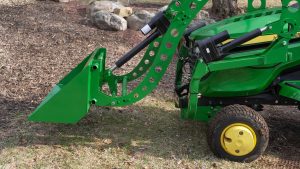


As the weekend approaches, many homeowners begin organizing a mental list of outdoor projects. A mulch pile waits to be spread. A gravel driveway shows signs of erosion after repeated storms. For years, these tasks relied on manual tools such as wheelbarrows, shovels, and a great deal of physical effort. Recent advancements in electric equipment have introduced a new option into this space, particularly electric front end loader systems designed for residential tractors.
Electric power has become common in many outdoor tools. Questions naturally arise when electric technology enters a category traditionally associated with hydraulics and diesel engines. Homeowners frequently ask whether electric front end loader power delivers the strength required for practical, real world property maintenance.
This article explores that question through practical examples, realistic performance expectations, and everyday use cases involving electric loaders designed for garden tractors.
Heavy equipment often brings to mind large construction machines lifting massive loads on commercial job sites. Residential projects operate on a very different scale. Most homeowners focus on tasks such as soil movement, mulch distribution, gravel grading, and snow relocation.
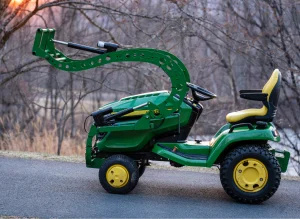
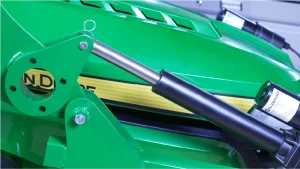
Electric front end loaders operate on a principle of appropriately sized power. Systems such as the LGM 100 rely on electric linear actuators rather than hydraulic pumps and fluid systems. Electric actuators deliver consistent force through controlled motion, supported by the tractor’s electrical system.
Typical home projects involve loads ranging from one hundred to three hundred pounds. A standard wheelbarrow holds approximately three to four cubic feet of material, which equates to roughly two hundred to two hundred fifty pounds when filled with soil. Electric loader systems designed for residential tractors commonly support lift capacities around three hundred fifty pounds, aligning well with the physical demands of home property maintenance.
This level of capability replaces repetitive manual labor with controlled mechanical assistance. Projects that once consumed an entire afternoon become manageable within a shorter timeframe while maintaining comfort and precision.
Performance specifications provide useful benchmarks, yet real value becomes clear through daily application. Electric loaders demonstrate effectiveness across a wide range of common residential tasks.
Seasonal mulch installation remains one of the most frequent applications. Bulk mulch deliveries create large piles that require repeated loading, transport, and placement. Electric loaders allow direct engagement with the pile, smooth lifting, and controlled dumping at garden beds.
Electric actuators provide steady movement, allowing operators to place material accurately around landscaping features. This controlled motion supports precise distribution without disturbing established plantings.
Gravel surfaces require periodic attention to address washouts and uneven areas. Gravel density places significant demand on lifting systems. Electric front end loaders supply consistent torque during lifting while preserving traction during material engagement.
Because electric loaders operate independently of engine power output, the tractor maintains full drive capability while lifting and transporting heavy material. This balance supports effective driveway maintenance and grading tasks.
Snow removal presents a unique application where electric loaders offer notable advantages. Snow occupies large volume while maintaining moderate weight. Bucket capacity allows relocation of snow rather than simply pushing accumulation to the edges.
Electric actuators operate quietly and consistently, supporting early morning use without unnecessary noise. The ability to stack snow higher than a traditional plow improves driveway accessibility throughout the season.
Beyond loose materials, electric loaders assist with transporting bulky items such as potted trees, landscaping stones, concrete bags, and equipment components. With appropriate lifting accessories, the loader functions as a controlled lifting platform.
The precise movement of electric actuators allows accurate placement, reducing risk to surrounding surfaces and structures.
Comparing electric and hydraulic loader systems involves more than lift capacity alone. Reliability, consistency, and maintenance requirements play a major role in residential ownership.
Hydraulic loaders provide fast cycle times and high lift capabilities suitable for commercial operations. Installation typically involves complex plumbing, fluid reservoirs, and ongoing maintenance. Performance varies with temperature and requires regular inspection.
Electric front end loaders deliver consistent speed independent of engine revolutions. Installation focuses on mechanical mounting and electrical connections rather than fluid systems. Electric actuators maintain load position without gradual movement and operate consistently across temperature ranges.
For homeowners, operational readiness remains the most valuable performance metric. Electric systems support immediate use without warm up procedures or fluid checks.
Purchasing a new subcompact tractor with an integrated loader represents a significant financial investment. Many homeowners already own reliable garden tractors suitable for mowing and towing.
Electric front end loader attachments expand the capabilities of existing equipment. This approach leverages the strength of the current tractor platform while adding functional versatility. The result provides substantial operational capability without the expense of a separate machine.
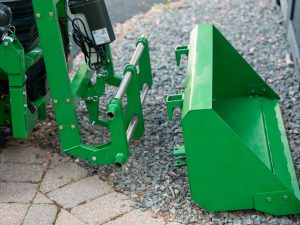
Electric loader systems are designed with homeowner installation in mind. The process typically involves securing mounting brackets, attaching loader components, and routing a wiring harness.
The absence of hydraulic systems simplifies installation. No welding or specialized equipment is required. Many owners complete installation within a single day using standard tools.
Completing installation provides familiarity with the equipment and confidence in its operation, adding to the overall ownership experience.
Electric front end loaders contribute to a sense of independence in property maintenance. Owners manage projects on their own schedules and respond quickly to changing needs.
From leveling ground for recreational installations to managing storm debris, electric loaders support efficient problem solving. Users frequently describe the experience as productive and engaging, transforming demanding tasks into controlled operations.
Electric front end loaders align well with the needs of homeowners managing one to two acres of property. They deliver sufficient lifting capability, manageable installation, and consistent performance for common residential tasks.
These systems provide an effective balance of power, efficiency, and accessibility. Electric technology supports a practical approach to property maintenance where precision and reliability matter most.
Electric front end loaders demonstrate that thoughtfully applied power serves homeowners well across a wide range of real world projects.
While electric loaders are designed for residential use, they provide ample torque to lift several hundred pounds of dense material. They are specifically engineered to manage the weight of wet topsoil, crushed stone, and gravel, making them highly effective for building garden beds or maintaining long, unpaved driveways without manual labor.
Electric actuators offer consistent lifting force that is ideal for transporting heavy, seasoned logs from woodpiles to the home. By utilizing the mechanical power of the loader, property owners can move significantly more wood in a single trip than a wheelbarrow allows, while also saving themselves from repetitive heavy lifting.
The cycle time of a modern linear actuator is optimized to balance power with control, ensuring you can lift and dump loads efficiently. While industrial hydraulics are faster, the steady and predictable movement of an electric system is often preferred by homeowners for precise tasks like spreading mulch or placing decorative landscaping rocks.
For clearing fallen branches, storm debris, or overgrown brush, the loader acts as a powerful extension of the tractor. It allows the operator to scoop up large piles of organic waste and transport them to a burn pile or compost area, significantly speeding up the process of seasonal property cleanup.
Modern electric loaders are designed to be highly efficient, drawing power only when the actuator is in motion. When the tractor’s engine is running, the alternator consistently recharges the battery, ensuring that you can operate the loader throughout the day for various projects without worrying about losing electrical power.


© 2026 All Rights Reserved | LGM USA LLC
Added to cart
Check out our shop to see what's available