
You back the X500 out of the garage on a Saturday morning, settle into the seat, and turn the key. Instead of the usual smooth start, the engine hesitates. Coughs. Catches, runs rough for ten seconds, then smooths out. You shrug, push the throttle up, and head out to start mowing.
That little hiccup was your tractor talking to you. The question is whether you are listening.
Most expensive lawn tractor repairs do not happen out of nowhere. They show up first as a small symptom. A sound. A vibration. A new puff of smoke. A sluggish lift on the loader. Catch it on a Saturday and it is often a simple driveway fix. Ignore it for two months and it is the kind of problem that means pulling the deck off, splitting things apart, and ordering parts you did not budget for.
This guide is the homeowner’s symptoms list for a John Deere X300 or X500 with an electric front-end loader. If you hear this, check that. If it does this, look for that. Plain English, no shop manual.
Diagnostic gear is fine. A multimeter is useful. But the three tools you already own are the ones that catch problems first.
Your ears tell you when a belt is slipping or a bearing is going. Your nose tells you when something is burning, leaking, or running too hot. Your eyes tell you when a wet spot has shown up under the tractor that was not there last weekend.
The guys who never get blindsided by a big repair are not the guys with the most tools. They are the ones who notice when the machine sounds, smells, or looks slightly different than it did a week ago, and they go figure out why before they keep using it.
The rest of this post is organized by symptom. Find what your tractor is doing, and start at the top of the list of likely causes.
The number one symptom every X300 and X500 owner runs into eventually is a tractor that does not start the way it used to.
If it cranks but will not catch: Start with fuel. Old gas in the tank or a fouled fuel filter is the most common culprit, especially after winter storage. Drain the tank, put fresh gas in, swap the inline fuel filter. While you are in there, pull the spark plug. If the tip is wet with fuel or coated black, that is your answer. Gap a fresh plug and try again.
If it starts but idles rough: Air filter first. Pop the cover, look at the foam pre-cleaner and the paper element underneath. A choked filter starves the engine and you get exactly what you are hearing. Cheap fix.
If it starts then dies under load: The carburetor probably has a partial blockage. Sometimes a few tanks of fresh gas with a cleaner additive will sort it out. Sometimes the bowl needs to come off. If you are not comfortable with that, this is a fair point to call for help.
If it just clicks when you turn the key: Battery or connections. Pull the cables, clean the terminals (baking soda paste, then a wire brush), and see if it cranks. If the battery is more than four or five years old and it has been sitting all winter, it might be done. A multimeter or a quick check at any auto parts store will tell you.
Your ear is one of the best diagnostic tools you have. After a few seasons on the same tractor, you know what it is supposed to sound like. When it sounds different, that is data.
Squealing belt: Almost always the deck belt or the drive belt. Either it is glazed, stretched, or there is debris wedged in a pulley. Pop the deck off, look at every pulley, look at the belt for shiny spots and cracks. If it is fraying, replace it now. A belt that lets go mid-cut leaves you stuck.
Grinding from under the deck: Stop. Kill the engine. Pull the deck. Spin each blade by hand and feel the spindle bearings. A bad spindle bearing growls and has play. Replacing one spindle is a homeowner job. Letting it go until it seizes is not.
Whining from the transmission area: The hydrostatic transmission on the X300 and X500 makes some noise normally, but a new high-pitched whine that gets worse under load is a flag. Check the fluid level first. If the fluid is low or looks dark and burnt, that is the start of the problem. Refill or service per your manual.
Knocking from the engine: This is the one you do not ignore. Engine knock can mean low oil, wrong fuel, or internal damage. Shut it off, check the oil, and if everything looks right but the noise is still there, do not run it. That is a call-for-help situation.
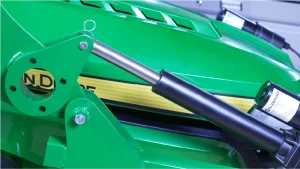
Buzzing or chattering from the loader: The LGM-100 actuator should run smooth and quiet. A buzz or chatter usually means the battery is weak, the wiring has a loose connection, or the actuator itself is starting to wear. We cover the most frequent loader complaints in this troubleshooting writeup.
Your nose is the second-best diagnostic tool. A new smell is almost always a problem.
Burning rubber: Belt is slipping or rubbing. Find it and fix it before the belt fails or starts a small fire in dry grass.
Sweet smell: Coolant leak. Most owners will not run into this, but if your specific tractor is liquid-cooled, follow the smell to a hose or a fitting. A small leak now is a cracked head later.
Hot electrical: Anything that smells like burnt plastic or hot wire. Stop the tractor. Disconnect the battery. Find the source. A melted wire under the dash is a fire hazard, not a tomorrow problem.
Heavy gas smell: Carburetor is flooding or the float is stuck. Sometimes a tap with a wrench frees it. Sometimes the bowl needs to come off and get cleaned. Either way, do not run the tractor with raw gas dripping somewhere.
The LGM-100 has its own set of symptoms worth knowing. Because it runs off an electric actuator instead of hydraulics, the failure modes are different from what most people picture when they think of a loader problem.
Loader lifts slowly: Battery first. The actuator pulls real current under load. A tired tractor battery that still cranks the engine fine can struggle to lift a full bucket. Test the battery. If it is older, replace it. If the battery is healthy, the next suspect is the wiring run from the controller to the actuator. Look for chafe spots, loose connectors, and corrosion.
Loader will not lift at all: Joystick or wiring before the actuator itself. Check the connections at the controller. Check the in-line fuse. The actuator is the most expensive part to replace, so always rule out the cheap stuff first.
Loader sags overnight: Less common with an electric actuator than a hydraulic one, but if you notice the bucket dropping while you walk away, the actuator’s internal lock might be wearing. Worth a call.
Bucket pins feel sloppy: Pins or bushings are wearing. Check that you have been greasing the fittings. If the pin holes look oval instead of round, it is time for new pins, and possibly new bushings. Catch it early and it is a parts swap. Let it go and you start damaging the loader frame itself.
Loader frame feels loose on the tractor: Pull the loader off and check the mounting bolts. Vibration backs them off slowly. A snug mount is the difference between a loader that lifts straight and one that twists every time you scoop.
The way the tractor feels under you tells you things too. A tractor that has been smooth for two seasons and then starts shaking is a tractor that needs a look.
New vibration when the deck engages: A blade is bent or unbalanced. This usually shows up after you hit a hidden rock or a stump. Pull the deck, swap the blade. Running with a bent blade chews up the spindle bearings fast.
Pulling to one side: Tire pressures first. The X300 and X500 want different pressures front and rear, and uneven pressure makes the tractor steer crooked. If pressures are right, look at the front wheels for a bent rim or a loose tie rod end.
Steering wheel has a lot of slop: Worn tie rod ends or a loose steering shaft. Catch it now and it is a few hours of work. Ignore it and you eventually wallow out the steering box.
Tractor lurches when you push the pedal: Hydrostatic transmission linkage is out of adjustment, or the dampers are wearing. Linkage adjustment is in your manual. The dampers are a parts replacement.
One last category. Sometimes the problem does not make a sound or smell. It just leaves a trail.
Wet spots on the floor: Pull the tractor forward and look at where it was sitting. Black wet is engine oil. Reddish is hydrostatic fluid. Green or pink is coolant (on liquid-cooled models). Find the source while it is still a drip.
White crust on the battery: Corrosion. Clean it before it eats the cable ends.
Cracked grease boots on the loader: Pivot points need attention. Replace the boot or at least clean and re-grease the joint before dirt gets in.
Frayed wiring near the loader actuator: A common one. The wire run takes a beating from sun, vibration, and the occasional close call with a tree branch. Patch it or replace the run before it shorts out and stops working entirely.
Mouse nests in the engine bay: If you store the tractor in a garage or a shed, mice love it. Check before you crank the engine. Chewed wiring is a real possibility.
Most of what is on this page is homeowner-doable. Belts, blades, fuel filters, spark plugs, battery connections, greasing, basic wiring inspection. A socket set, a screwdriver, a multimeter, and a Saturday afternoon will handle a lot of it.
Where it makes sense to call:
For loader-specific stuff, talk to us first. We make the LGM-100 and we have seen most of what goes wrong with one. A lot of loader-specific issues turn out to be simple once you know where to look.
The point of catching problems early is not lost revenue. You are not out there making money with this tractor. The point is your weekend.
A belt that gets replaced when you notice the squeal is a quick, cheap fix. A belt that snaps mid-cut leaves you with a dead tractor in the middle of a half-cut lawn, an unscheduled trip to the parts counter, and a Saturday that did not go the way you planned.
That is the whole calculation. Pay attention now, or pay with your time later.
The guys who get the most out of an X300 or X500 are not the ones with the biggest tool collection. They are the ones who notice when something feels different, sounds different, or smells different, and they handle it before it grows.
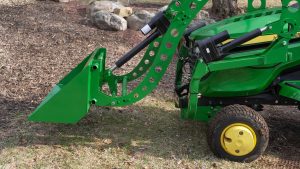
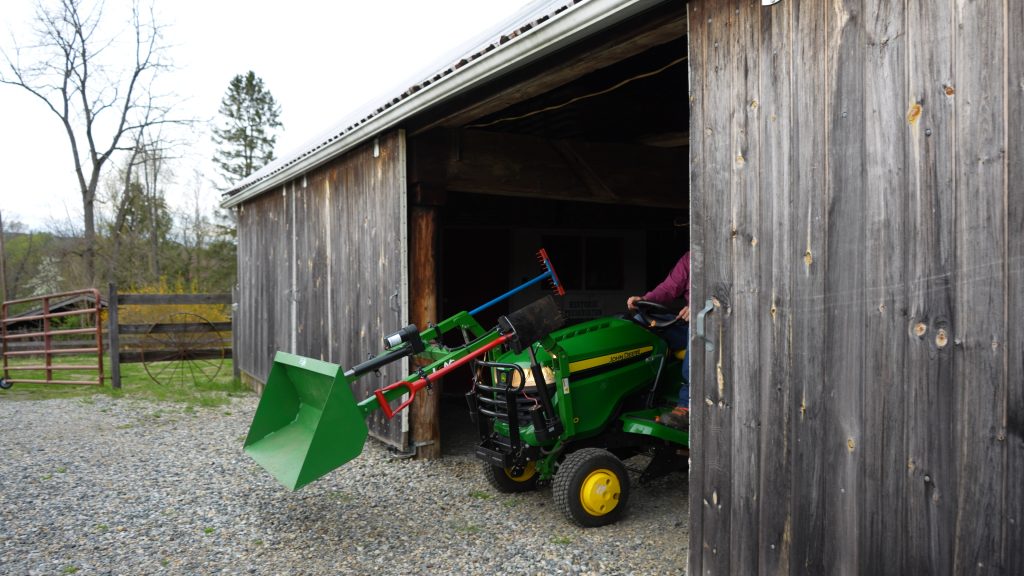
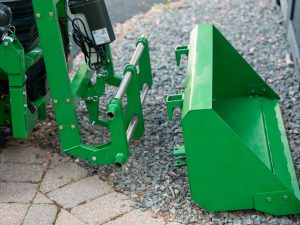
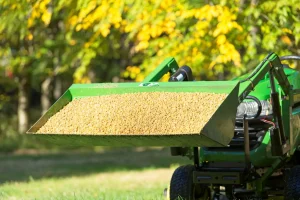
If you already own a John Deere X300 or X500 and you want it to do more than mow, take a look at the LGM-100 front-end loader. It bolts onto the lawn tractor you already own, lifts about 320 pounds, and runs off your tractor battery and a joystick. Built for the homeowner who would rather move mulch with his tractor than push a wheelbarrow back and forth.
Take care of the machine. It will take care of your Saturday.
Early engine problems often appear as unusual noises, vibrations, or a loss of power. Exhaust smoke can also indicate specific issues: blue smoke suggests oil burning, black smoke indicates excess fuel, and white smoke may point to coolant leaks. Identifying and addressing these signs early can prevent major engine failure.
The cooling system regulates engine temperature and prevents overheating. Regular maintenance such as cleaning radiator fins, checking coolant mixture, and inspecting hoses helps prevent serious damage like warped cylinder heads or blown head gaskets.
Tire condition directly affects safety and drivetrain performance. Under-inflation causes heat buildup and wear, while over-inflation reduces traction. Regular inspections for damage, dry rot, and proper lug nut torque help prevent costly mechanical issues and improve stability.
The electrical system powers starting and engine management components. Corroded terminals, damaged wiring, or loose connections can overload the alternator or starter motor. Regular inspection and cleaning prevent electrical failures and costly component damage.
Lubrication reduces metal-on-metal friction in key moving parts like steering linkages and hitch components. Regular greasing prevents wear, reduces mechanical play, and keeps systems operating smoothly while protecting against moisture and corrosion.

© 2026 All Rights Reserved | LGM USA LLC
Added to cart
Check out our shop to see what's available