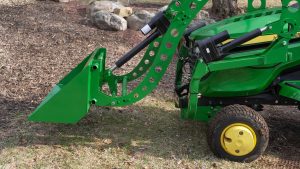

It’s a Saturday in March. The grass is still brown, but the days are getting longer. You wander out to the garage, pull the tarp off your X300, and realize you have not turned it over since you parked it in November. The mower deck is sitting in the corner. The LGM-100 is still bolted on the front from that last load of leaf mulch you pushed in October.
Sooner or later you are going to want this thing to start. Probably next weekend, when the lawn finally needs a first cut. The question is whether it fires right up, or whether you spend the morning chasing a dead battery and a fuel bowl full of varnish.
That is what preventive maintenance is. Not a big project. Not a shop visit. Just a short list of things you handle on a schedule so the machine is ready when you need it.
This is a homeowner schedule for a John Deere X300 or X500 lawn tractor with an electric front-end loader on the front. No diesel rebuilds. No hydraulic flushes. Just the stuff that actually matters for a guy with a half-acre to a couple acres and a weekend to spend on his property.
Some guys wait until something breaks. The blade dulls so the lawn looks ragged. The belt squeals so they pull the deck. The tractor will not start one Saturday so they finally swap the spark plug.
That works, but it costs you weekends. Every time you have to stop in the middle of a project to chase a problem, that is half a day you did not spend doing what you actually planned to do. The point of a schedule is not to be obsessive. It is to push the small stuff to a Saturday you have set aside for it, instead of letting the small stuff hijack the Saturday you set aside for mowing or moving mulch.
Hour-meter intervals are the cleanest way to do it. The X300 and X500 both have an hour meter on the dash. Use it. Snap a phone photo at every milestone (50, 100, 150 hours), and your maintenance calendar writes itself.
Before you turn the key, give the tractor a five-minute look. This is the single best habit you can build, and it costs you nothing.
Walk around the machine and check for anything obvious. A puddle under the engine. A tire that looks low. A loose bolt on the deck or the loader frame. Bird nest in the engine bay (it happens more than you think). Anything chewed by mice over the winter.
Pop the hood. Glance at the oil dipstick. Look at the air filter housing. Check that the battery cables are tight. None of this takes more than a minute or two once you know what you are looking at.
Then walk to the front and look at the loader. Are the bucket pins still seated? Any grease weeping out of a fitting that should not be? Does the electric actuator look like it took a hit you forgot about?
Catch the small stuff before you climb into the seat. That is the whole game.
Most homeowners do not put anywhere near 25 hours on a lawn tractor in a single weekend. For a guy mowing his own yard, 25 hours is roughly a month or two of regular cutting. Use the hour meter on the dash, not your gut.
Here is what gets handled every 25 hours:
Tire pressure. Check all four. The X300 and X500 want different pressures front and rear, and the manual will spell it out. Low pressure scuffs the lawn and makes the steering vague. Over-inflated and the ride beats you up.
Air filter. Pop the cover and look at the foam pre-cleaner and the paper filter underneath. If the foam is grimy, wash it in warm soapy water, let it dry, and re-oil it. If the paper element is dark, replace it. A choked filter robs power and runs the engine hot.
Mower blades. Tip the deck or pull it off. Inspect the blade edge visually for rounding, nicks, or tearing. Do not run your thumb along the cutting edge. Sharp blades cut grass clean. Dull blades tear it, which leaves brown tips on every blade of grass on your lawn. Sharpen or swap every 25 hours during mowing season.
Belt inspection. Look at the deck belt and the drive belt. You are looking for fraying, cracks, glazing (a shiny spot), or chunks missing. A belt that is starting to fail will let go right when you do not want it to.
Loader bucket pins. Hit the grease fittings on the LGM-100 bucket pins and pivot points. Push grease in until you see a little clean grease squeeze out the side. That pushes the old gritty stuff out and keeps the pins from wearing oval.
This is the layer most homeowners skip. Do not be that guy.
Engine oil and filter. Drain it warm. Pull the filter. Refill with the weight your manual specifies (use the oil weight specified for your specific engine and your temperature range, but check). Change the oil and filter at the interval listed for your exact X300/X500 model in the owner’s manual. If you mow in a lot of dust, do it sooner.
Spark plug. Pull it, look at it, gap it or replace it. A fouled plug is one of the most common reasons a tractor cranks but will not start in spring.
Fuel filter. The little inline filter is cheap. Replace it once a year, ideally in spring. It is a five-minute job that saves you a no-start morning.
Battery check. Clean the terminals if you see white crust building up. Baking soda and water, then a wire brush. Check that the hold-down is tight so vibration does not shake the battery to death.
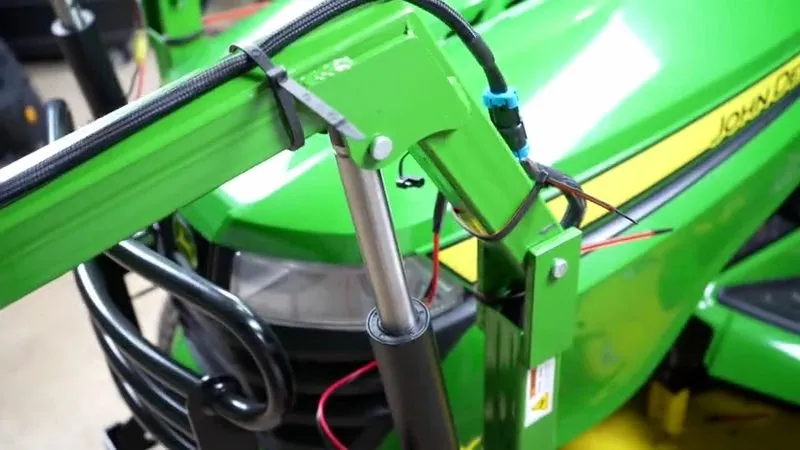
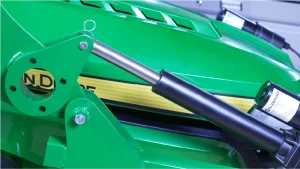
Loader actuator inspection. The LGM-100 runs off a linear electric actuator. Look at the housing for cracks, look at the wiring for chafe spots, and listen to it move. A healthy actuator sounds smooth. A noisy one is telling you something. We cover this in more depth in the front-end loader maintenance guide.
The X300 or X500 lives outside or in an unheated garage for most of its life. The seasons matter. Here is the rough rhythm.
This is your big startup pass. Pull the cover off, charge the battery, replace the spark plug, swap the fuel filter, top off or change the oil, sharpen the blades, and check tire pressures. If you stored it with stabilized fuel, you should be in good shape. If you did not, drain the tank and put fresh gas in. Old fuel is the number one reason a stored tractor will not start.
Take ten minutes on the loader too. Wipe down the actuator, hit the bucket pins with grease, and look for any rust spots that need a quick scuff and a dab of paint.
Mowing season is your high-use stretch. Stay on top of blade sharpness, deck cleaning, and air filter checks. Hose the underside of the deck off after every few cuts so grass clippings are not packed in there rotting. A clean deck cuts cleaner, and a deck that is not packed with wet grass also weighs less, which means the belt is not fighting extra mass every time the blades engage.
Mid-summer is also a good time to recheck tire pressures. Heat changes air pressure inside the tire, and rear ag-style tires especially can swing several PSI between a cool morning and a hot afternoon. Adjust to the manual spec on a cool tire.
If you push mulch with the loader between cuts, hit the bucket pins with grease every couple of weeks. Mulch dust is gritty and gets into everything.
This is leaf and yard cleanup season. Lots of loader work moving leaf piles, pushing brush around, hauling firewood. Check the loader frame bolts every few uses, because vibration from rough ground can back them off slowly. Drain the deck of grass, and look at your belts before you store the deck for winter.
Fall is also when most homeowners do their last oil change of the year. Doing it now (instead of next spring) means the engine sits all winter on clean oil instead of acidic, used oil that can pit bearings and cylinder walls. Same thinking applies to the air filter. Swap a dirty one in October so the engine starts spring with a clean breath of air.
If you are not pushing snow with the LGM-100, this is shutdown season. Fill the fuel tank, add a stabilizer, and run the engine for ten minutes so the treated fuel makes it through the carburetor. Disconnect the battery or put it on a tender. Park on a dry surface, not bare dirt. Cover it loosely so condensation can vent.
If you are pushing snow, treat snow season as another high-use stretch. Same checklist as summer, just colder hands.
An electric front-end loader is simpler than a hydraulic one. There is no fluid to flush, no hose to bleed, no pump to service. But it is still a piece of attached hardware that takes vibration and load every time you use it. A few items deserve their own attention.
Bucket pins and pivots. Grease every 25 hours of loader use. More if you are working in dirt or mulch. Less if you only push snow.
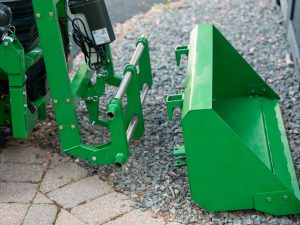
Mounting bolts. Check the bolts that hold the loader frame to the tractor every season. Vibration can back them off. Check the mounting bolts for looseness every season and retorque them to the loader and tractor spec if needed.
Actuator wiring and connections. Look at the wire run from the joystick controller to the actuator. Vibration, sun, and the occasional close call with a tree branch all chew on wiring. A loose or chafed wire is one of the easier ways to lose loader function.
Battery health. The LGM-100 draws from your tractor battery. A tired battery that still cranks the engine fine might still struggle to lift a full bucket. If lift speed feels slow, suspect the battery before you suspect the actuator.
For more on what shows up on a typical inspection, the loader health check article walks through what we look at remotely when an owner is not sure what is going on.
A weekend warrior with a basic socket set, a grease gun, and twenty minutes can handle 90 percent of what is on this page. Oil changes, blade sharpening, air filter swaps, greasing pins, checking belts. None of this requires a shop.
Where you might want to call in help:
For straight loader questions, you can call us before you call your local dealer. We built the LGM-100 and we know what tends to go wrong with one. Most of the time it is a five-minute conversation, not a service call.
One last thing. Keep a simple log. A note on your phone is fine. Write down what you did and the date. Oil change. Plug change. Sharpened blades. Greased the loader. Replaced the air filter.
Two reasons. First, you stop guessing about when something is due. Second, when you eventually sell the tractor or hand it down, a clean log makes the machine worth more and gives the next owner a head start.
Maintenance is not glamorous. But the tractor that starts on the first crank in April, idles smooth in July, and pushes snow in January is the one that got fifteen minutes of attention every month. That is the deal. A little effort up front, a lot less hassle later.
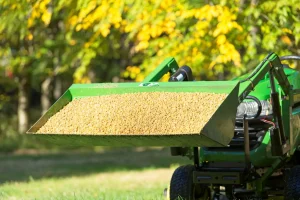
Want to make your X300 or X500 do more than just mow? Take a look at the LGM-100 front-end loader attachment. Bolts onto the lawn tractor you already own, lifts about 320 pounds, runs off your tractor battery and a joystick. Built for the homeowner who wants the same machine to handle mulch, gravel, firewood, and snow without buying a separate tool for every job.
Your tractor can do a lot more than cut grass. Keep it tuned and it will.
Regularly checking engine oil and coolant levels is essential for engine longevity. Oil should be inspected before each use to ensure proper level and cleanliness, as low or dirty oil can cause severe internal friction. Coolant must also be maintained at the correct mixture to prevent overheating and protect seals and gaskets from heat damage.
Air filters should be checked frequently, especially in dusty environments, as clogging reduces airflow and increases fuel consumption. Fuel filters should also be inspected and replaced at recommended intervals to prevent contaminants from reaching the engine and causing stalling or power loss.
Battery maintenance is crucial for consistent starting performance. Terminals should be checked for corrosion and kept tightly connected. For tractors used infrequently, a battery maintainer helps prevent deep discharge, which is a leading cause of early battery failure.
Regular lubrication protects moving metal parts from friction, dirt, and moisture. Applying grease to pivot points and joints reduces wear, improves steering response, and prevents mechanical binding that can lead to expensive repairs over time.
Proper tire pressure ensures even traction and reduces strain on drivetrain components. Inspecting belts for cracks, fraying, or glazing helps identify wear early so replacements can be made before failure occurs, preventing breakdowns during critical work.

© 2026 All Rights Reserved | LGM USA LLC
Added to cart
Check out our shop to see what's available