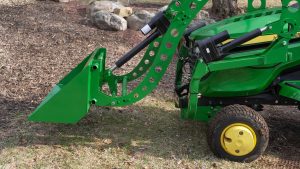

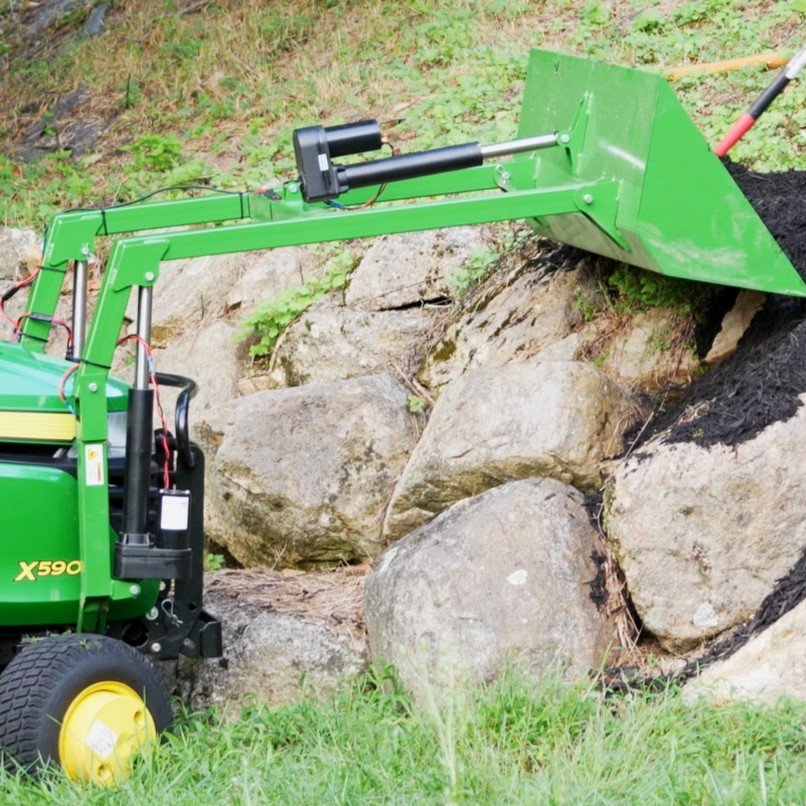
Ever caught yourself staring at the pile of mulch sitting in the driveway (maybe three or four yards of it) that the delivery truck dropped off yesterday? It looks like a mountain. Beside it, your trusty wheelbarrow sits tipped over on the grass, looking almost mocking.
You love your property. You take pride in the crisp lines of your lawn and the way the gravel driveway crunches under your tires. But lately, the “joy” of maintaining it feels a lot more like grueling manual labor. If you’ve found yourself staring at that pile of mulch (or gravel, or topsoil) and dreading the next six hours of ‘shovel, haul, dump, repeat’, you are already halfway to making a decision that will change your weekends forever.
As someone who has spent two decades in this industry, we’ve seen the same story play out a thousand times. Homeowners buy a quality garden tractor like a John Deere X300 or X500 series, primarily to cut grass. And it does that job beautifully. But then, the ambitions grow. You want to redo the flower beds. You need to regrade the driveway after a storm. Suddenly, the mower isn’t enough, but a full-sized farm tractor is too big (and too expensive).
This is usually the moment you start wondering if there’s a better way. Spoiler alert: there is. Here are the undeniable signs that you are ready to stop breaking your back and start letting your machine do the work by adding a front-end loader for tractor setups.
Let’s be real for a second. We aren’t in our early twenties anymore. When we were younger, we could spend all day shoveling gravel and only feel a little stiff the next day. Now? If we spend four hours hauling heavy material by hand, we’re paying for it until Wednesday.
The most obvious sign isn’t in your yard; it’s in your lower back. If you are scheduling your landscaping projects around how much Ibuprofen you have in the cabinet, it’s time to upgrade. A garden tractor is a powerful machine, essentially a small vehicle with a strong chassis. Using it only to spin cutting blades is like using a pickup truck only to carry groceries. It can do so much more.
By adding a loader, specifically something engineered for your existing machine, like the LGM-100, you transfer that physical strain from your spine to the steel frame of your tractor. Instead of lifting 50 pounds of wet soil a hundred times, you toggle a switch.
Time is the one resource they aren’t making any more of. If you work a ‘9-to-5’, your weekends are sacred. You want to spend them enjoying your property, grilling with the family, or watching the game, not sweating through your shirt moving dirt from Point A to Point B.
Think about the projects you’ve been putting off because they take too much time and effort:
We had a client in New Jersey a few years back who told me he had a pile of topsoil sitting in his side yard for two months. He couldn’t find the uninterrupted six-hour block he needed to move it with a wheelbarrow. Once he upgraded his tractor with a loader, he moved that entire pile in 45 minutes on a Tuesday evening before dinner.
When you start calculating the tractor front-end loader benefits in terms of hours saved rather than just dollars spent, the investment makes a lot of sense. Speed isn’t just about being impatient; it’s about reclaiming your weekend.
Depending on where you live in the US, winter is either a cozy season or a battle for driveway dominance. If you are relying on a walk-behind snowblower or, heaven forbid, a snow shovel, you know the struggle. The wind whips snow back in your face, the blower catches on an uneven paver, and you freeze your toes off.
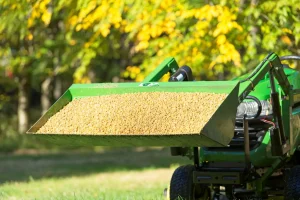
A front-end loader isn’t just for dirt. It’s a snow-moving beast. Unlike a plow blade that pushes snow to the side (eventually creating banks you can’t push past), a loader allows you to scoop the snow and pile it high, out of the way. If you find yourself dreading the forecast, it’s a sign your equipment needs an upgrade.
This is a specific one, but it’s crucial. If you own one of these machines, you are sitting on a goldmine of potential. These tractors are built with a level of durability that far exceeds the average big-box store mower. They have strong frames and reliable transmissions.
For a long time, owners of these tractors felt stuck. They were told, “If you want a loader, you need to buy a sub-compact utility tractor.” That meant spending $15,000 plus on a green machine that might not even fit through your garden gate.
Companies like LGM USA changed that narrative. They realized that the tractor you already have in your garage is perfectly capable of handling a loader, provided the loader is designed correctly. If you have the tractor, but you’re still using a wheelbarrow, you are leaving massive potential untapped.
We’ve all been there. You have a project that is just too big for a shovel, so you look up rental prices for a Bobcat or a mini-excavator. You see the price ($300 to $500 for a day, plus delivery fees, plus the hassle of learning new controls) and you hesitate.
If you find yourself renting equipment two or three times a year, or putting off projects because you don’t want to pay rental fees, that is a sign. Owning a front-end loader means you don’t have to batch your projects into a frantic 24-hour rental window. You can spread five yards of mulch over three weekends if you want to. You can move that one fallen log on a Tuesday morning. The “barrier to entry” for starting a project disappears.
This is where we need to talk about technology. Traditionally, if you wanted a loader, you needed hydraulics. And look, hydraulics are great for massive farm equipment. But for a homeowner? They can be a nightmare. Leaky hoses, hot fluid, loud pumps, and the constant fear of dripping oil on your pristine paver driveway.
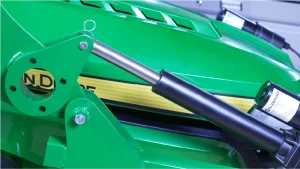
One of the modern signs you’re ready for an upgrade is that you want power without the mechanic-level maintenance. This is where the electric advantage comes in. Systems like the LGM-100 use electric linear actuators to give you serious capability without the headache:
If you are the type of person who likes to keep their garage floor clean and their maintenance routine simple, the shift toward electric actuators on garden tractors is exactly what you’ve been waiting for.
So, when to add a front-end loader to a tractor? The best time is usually right before your spring rush or just before the winter snows hit. But honestly, the real answer is: as soon as you realize your time is worth more than the cost of the attachment.
There is a psychological shift that happens when you upgrade. You stop looking at your yard as a chore list and start looking at it as a canvas. You see a low spot in the lawn? You fix it instantly. You need to move firewood closer to the porch? Done in five minutes.
Upgrading your tractor with a front-end loader isn’t just about buying a tool. It’s about acknowledging that you’ve graduated from “mowing the lawn” to “managing a property.” It’s an investment in your back, your time, and your enjoyment of the great American outdoors.
If you’re nodding your head to any of these points, take a look at your tractor. It’s ready to work harder for you. You have to give it a chance.
A loader becomes necessary when manual tasks like moving mulch, gravel, or soil start causing strain or take too long to complete. It upgrades a basic tractor into a versatile machine capable of handling heavy lifting efficiently.
A front-end loader significantly reduces the time required for landscaping tasks by mechanically transporting heavy materials and debris. This improves productivity and allows homeowners to complete property maintenance much faster.
If your projects involve retaining walls, gravel driveways, or heavy brush clearing, manual labor becomes inefficient. A loader provides the lifting power needed to handle large materials safely and effectively.
Yes. A loader greatly expands a tractor’s functionality, allowing it to handle seasonal tasks like planting, hauling, cleanup, and light snow removal, making it useful year-round.
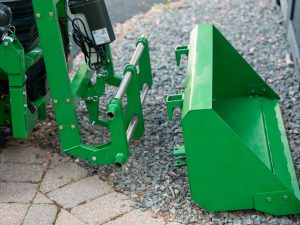
Modern loaders are designed for simple installation with bolt-on systems and basic electrical connections, making it easy for homeowners to upgrade without advanced mechanical skills.

© 2026 All Rights Reserved | LGM USA LLC
Added to cart
Check out our shop to see what's available