
When you’re out in the yard pulling long days with heavy lifting, you want gear you can count on. At LGM USA, we understand that. Whether you’re dealing with sodden mulch, a big delivery of topsoil, or piling up firewood for the winter, choosing the right attachment is important. In this post we’ll walk through how a garden tractor front end loader, specifically an electric-powered model, handles these tasks and why you should consider one for your property.
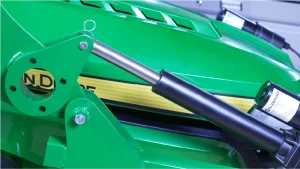
First, let’s talk about what we mean by an electric front end loader. Traditionally, front end loaders on big tractors use hydraulic systems such as pumps, hoses and fluid that add complexity, weight and maintenance. With an electric loader you’re talking about linear actuators, fewer moving hydraulic parts, less risk of leaks and simpler upkeep. An electric garden tractor front end loader is significantly lighter, cleaner (no fluid to leak), and virtually maintenance-free.”
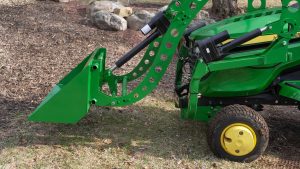
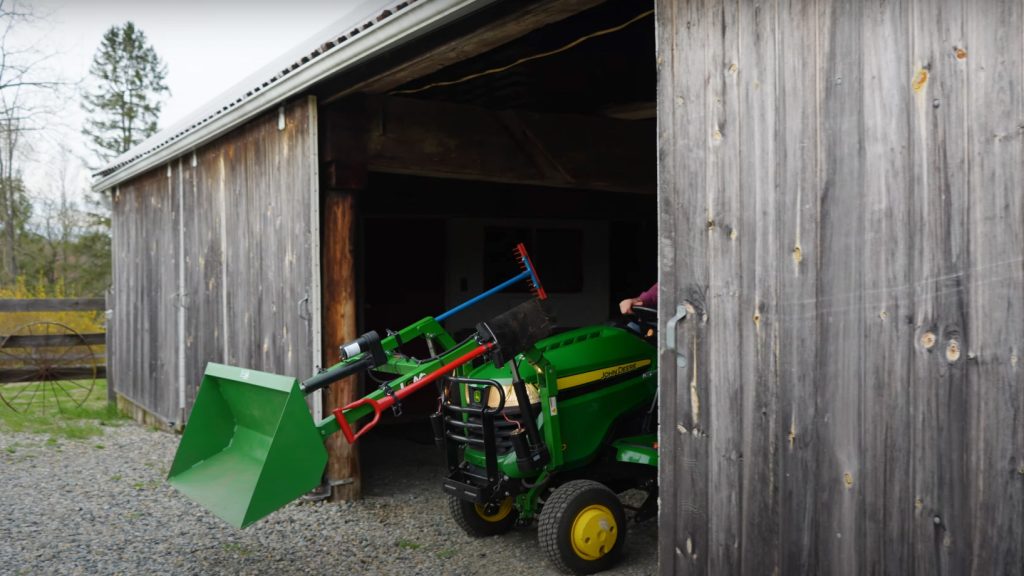
For homeowners, small acreage, or properties where you already run a garden tractor, this makes a lot of sense – less hassle, more versatility, and you’re not turning your mower into a full agricultural beast – just making it far more capable. At LGM USA, our model (the LGM‑100) is engineered to bolt onto John Deere X300/X500 type garden tractors, giving you utility without going massive.
That said: let’s dive into what happens when you use it on three specific materials homeowners deal with: wet mulch, topsoil, firewood.
Mulch seems simple, it’s wet, heavy, sticky and messy, it can throw curveballs. Here’s how an electric front end loader handles it, and what to keep in mind.
What wet mulch throws at you
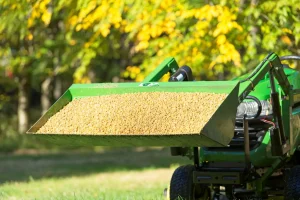
With the LGM-100 (and similar electric models), you have a bucket size suited for home/acreage use (e.g., 3 cu ft) and a lift capacity around 300 – 350 lbs. Because it’s designed for these kinds of “lighter-industrial / heavier-home” loads, it gives you enough muscle without overwhelming your tractor.
Here are some tips when working with wet mulch:
Bottom line: On wet mulch, a quality electric front end loader lets you move material faster, safer and with less effort compared to a wheelbarrow or plain tractor bucket.
Moving topsoil
Topsoil is a different beast. It is heavier than mulch, often denser, maybe damp, full of clumps or roots. Your loader has to be up for the job.
What topsoil demands
The design of an electric loader for a garden tractor is such that it gives you lift and dump control suited to this kind of material. The lift capacity of the LGM-100 (350 lbs) means you can move a few cubic feet at a single time safely. If you were trying to move big truck-loads of soil at once, you’d need full tractor hydraulics, but for residential jobs this is often more than adequate.
Practical tips for topsoil moves
Bottom line: While this isn’t heavy-agriculture gear, a well-designed electric loader becomes a game-changer for managing topsoil on small to medium acreage. It gives you efficiency, control and independence.
Piling and moving firewood
Firewood might be the most “home-oriented” of the three materials considered, but it brings its own quirks: irregular shapes, heavy chunks, risk of snagging, and often being handled in a tight yard or near buildings.
What firewood work involves
In this scenario, the electric front end loader acts as a versatile helper – you can scoop loose rounds, carry them across your property, dump them in the woodpile, maybe use the bucket edge to scrape up smaller branches and debris. Because the loader is electric, you benefit from smoother, quieter operation. It is good when you’re working early or late, and don’t want commotion.
Best practices for firewood with your electric loader
Thanks to the lift height and capacity of an electric loader attachment, instead of just grabbing random buckets of wood, you’re doing real work. Users of the LGM-100 report being able to move large amounts of material (rocks, clay, etc.) so that firewood isn’t left beyond it.
Bottom line: For firewood clearing, stacking or moving, a dependable garden tractor front end loader makes the task dramatically faster and less physically draining.
If you’re in the market and scanned listings for “front end loader for sale,” here are key features to check, especially when you want one that can handle mulch, soil and firewood:
When you see listings marked “front end loader for sale,” ask if it’s truly engineered for garden tractor use, whether it’s hydraulic or electric, what the actual lift specs are, and whether it’s compatible with your make/model. A generic tractor loader may not deliver the reliability you need.
Imagine a typical spring morning: you’ve just had a 15-yard delivery of topsoil, you’ve decided to refresh your garden beds with new mulch, and you need to bring in last winter’s firewood stash to a dry shed before rainy weather sets in.
You connect your electric front end loader to your garden tractor. No hydraulic leaks, no engine revving high, everything’s quiet as you roll into the yard. First, you load topsoil. You set your deposit points, drive in with a good clear view, fill the bucket, lift, and dump into the spread zone. You repeat, take your time, don’t strain the machine, and when you finish in half the time you’d budgeted.
Next, you move mulch. Rain has left it damp. But you know the loader arms can handle it. You take a slightly lighter scoop, tilt carefully, and control the dump. The mulch flows. Your yard looks fresh. One sweep later the bed is done.
Last, you drive to the firewood pile. Logs are scattered, some bigger than you’d want for a wheelbarrow. You scoop, tilt back slightly for safety, carry to the wood shed, dump, and stack. The loader is doing real work but you’re still in control, centered in your tractor, enjoying the process rather than fighting it.
At the end of the day, you park the loader, maybe rinse off debris, note a bolt or two to check later and you’re done. No wheelbarrows, fewer trips, less grunt. Just a smart attachment turning your property-care routine into something efficient, satisfying.
Final thoughts
If your goal is to make your tractor do more without turning it into some massive machine that’s doesn’t fit your yard, then an electric front end loader from LGM USA is worth serious consideration. It gives you a powerful tool for moving materials like wet mulch, topsoil and firewood. Tasks that can otherwise feel like you’re fighting your gear rather than using it.
When shopping for a garden tractor front end loader, focus on compatibility, build quality, control ease and real-world lift/capacity. And remember, when you see “front end loader for sale,” ask the right questions.
In short: upgrade your gear, save your back and reclaim your yard work from “all-hands on wheelbarrow” to “smart machine and operator.”
If you’re ready to take the next step, check out our model at LGMUSA and see how it fits your tractor, your terrain, and your workload. Let’s make this season the one where the loader earns its keep.

© 2026 All Rights Reserved | LGM USA LLC
Added to cart
Check out our shop to see what's available