
There is nothing quite as tiring as spending a gorgeous Saturday morning fighting with a yard that refuses to look the way you want it to. You made the investment in a top-tier machine, expecting it to handle the heavy lifting, yet here you are: manually raking massive clumps of damp grass.
Maybe you’re dragging a heavy wheelbarrow across two acres of uneven turf. Or perhaps you’re spending four hours shoveling the driveway after a surprise April snowstorm. It feels like you’re doing all the work while that expensive green machine just sits there.
To stop the frustration and reclaim your weekend, you need the right John Deere lawn tractor accessories to bridge the gap between just a mower and a true property workhorse. Whether you’re maintaining a half-acre lot in Pennsylvania or a tidy suburban yard in Georgia, the right add-ons make sure your tractor performs at its absolute peak.
It is easy to look at a bare tractor and assume its only purpose is to spin blades over a patch of grass. If all you do is mow with it, you’re leaving a lot of usefulness on the table. You are leaving a massive amount of your machine’s utility unused. A few strategic additions can change your entire relationship with your land.
When you stop viewing your John Deere as a simple chore machine and start seeing it as a versatile tool for your weekend, that is when you truly begin to get your money’s worth. Our properties are our pride and joy, and we don’t have time for gear that doesn’t pull its weight.
When we start talking about the best accessories for John Deere lawn tractors, we have to begin where the rubber actually meets the grass: the mower deck. Most homeowners stick with the factory side-discharge setup. It’s fine for getting the job done, but it often leads to those unsightly rows of dead grass clippings that suffocate your lawn.
If you want a manicured, golf-course finish without the back-breaking labor of raking or blowing, you have to look at your deck as an adjustable tool. Mulching is the single most impactful thing you can do for the long-term health of your property.
By installing a high-quality mulch kit, you turn your mower into a mobile fertilizer plant. Those tiny clippings are shredded so finely that they fall deep into the turf, returning nitrogen and moisture to the soil. On the flip side, if you live in a part of the country where leaf-fall in October is a literal mountain of work, a Power Flow bagger is non-negotiable.
It uses a high-speed blower to force leaves and grass into rear-mounted bags, clearing your yard in a single pass. It’s the difference between a three-day raking project and a forty-minute ride with a cup of coffee in your hand.
To get the absolute most out of your investment, you have to look beyond the grass-cutting season. A John Deere engine is built for torque and longevity, and it has plenty of power to handle tasks that would otherwise have you renting heavy equipment or hiring a guy.
By consulting a comprehensive John Deere tractor attachments list, you can identify the tools that will turn your tractor into a four-season workhorse:
If you’re looking to get the most for your money, you’ve got to think beyond just cutting grass. These are the tools that actually change how you take care of your property. Over the years, we’ve found that a few specific items consistently show up on the must-have lists of homeowners who take pride in their yard.
If you’ve ever looked at your lawn and wondered why it looks thin, patchy, or yellow despite all the fertilizer you’ve bought, the problem is likely hiding beneath the surface. Over time, the soil on your property becomes compacted. This is especially true in high-traffic areas where the kids play or where you’ve driven the mower over the same path for five years.
When the soil is packed tight, oxygen, water, and nutrients can’t reach the roots. This is where specialized mower attachments like tow-behind plug aerators become essential. Unlike spike aerators that just punch holes and compact the soil further, a plug aerator actually removes small cores of dirt, allowing the ground to expand and breathe.
Following up an aeration session with a tow-behind spreader for seed and lime makes sure that your maintenance routine actually produces the lush, green results you see in the magazines.
A dethatcher is also a great tool for pulling up the layer of dead organic matter that can suffocate your grass if it gets thicker than half an inch. These are mechanical solutions to biological problems, and they are much more effective than simply throwing more chemicals at the yard.
We often spend so much time focusing on what the tractor can do for the yard that we forget what we can do for the person sitting in the seat. If you’re spending three hours out in the heat of a July afternoon, comfort isn’t just a luxury, it’s a safety issue. When you’re browsing for lawn tractor add-ons, don’t overlook the items that make the experience better for you behind the wheel.
A sun canopy is probably the most underappreciated upgrade you can buy. Keeping the direct, beating sun off your neck and shoulders drastically reduces fatigue and helps you stay focused on the task at hand. Similarly, if you’re doing a lot of work near brush or wooded areas, a front brush guard is a smart move. It protects the expensive plastic hood and headlights from being cracked by a stray branch or a poorly placed fence post.
And for those of us who often find ourselves finishing the backyard as the sun is starting to set, upgrading to LED work lights is a massive improvement over the stock bulbs. Being able to clearly see the edge of your flower beds in the dusk saves a lot of accidental trimming of your prized flowers.
In many parts of the country, we aren’t exactly working with billiard-table flat ground. You might be dealing with the rolling hills of Tennessee or the sandy, slippery soil of a coastal property. If your tractor feels like it’s struggling to climb or if you find yourself slipping on wet grass, you don’t necessarily need a bigger engine, you need better traction. This is a part of performance that many people overlook until they are stuck in a ditch.
Adding wheel weights or suitcase weights to the rear of your machine is the easiest way to improve stability. When you have a heavy attachment like a front blade, the center of gravity shifts forward, making the rear wheels light. By adding weight to the back, you pin those tires to the ground and make sure every bit of horsepower is translated into movement.
For those in particularly muddy or icy areas, tire chains or even specialized bar-lug tires can be installed. These upgrades turn a standard residential mower into a machine that can handle slopes and soft ground with confidence. It is about working with the physics of your specific property.
For the homeowner who wants that perfectly level, weed-free look, there are precision tools that attach to the rear hitch in seconds. If you have an acre or two, hand-spraying weeds or fertilizer takes forever. A tow-behind sprayer lets you treat your entire lawn in one or two passes, ensuring even coverage and saving you hours of walking. These sprayers come with booms for wide coverage and wands for spot-treating the edges of your garden beds.
Another tool that often gets overlooked is the lawn roller. If your yard has become bumpy over the winter due to frost heave or if you have moles making a mess of things, a water-filled roller can smooth things out. It’s also useful when you are laying down new sod or seeding a fresh patch of lawn, since it makes sure the seed has good contact with the soil. These are homeowner favorites that look harder than they are.
Look, we get it, opening a box of parts and a manual can feel a bit overwhelming, especially when you just want to get the grass cut before the game starts. But honestly, John Deere has made these bagger setups pretty slick over the years. You don’t need a degree in mechanical engineering to get this done. Here’s the real-world way to get that bagger hooked up to your X300 or X500 without losing your mind.
Even the best gear won’t help if the tractor itself is struggling. Part of being a responsible owner is staying ahead of the maintenance curve. We always recommend keeping a Home Maintenance Kit in your shed. These kits include everything (oil, filters, and spark plugs) in one box, tailored to your engine.
In the USA, our fuel often contains ethanol, which can wreak havoc on a small engine if it sits for more than 30 days. Using a high-quality fuel stabilizer is the easiest way to prevent a gummed-up carburetor. Also, remember to grease the spindles and the front axle regularly to keep everything moving smoothly under the weight of your new attachments.
Your John Deere is a partner in keeping your property in top shape. By choosing the right John Deere lawn tractor accessories, you stop wasting weekends on back-breaking labor and start actually enjoying the work. It is about working smarter and making sure your land looks exactly how you want it to every season.
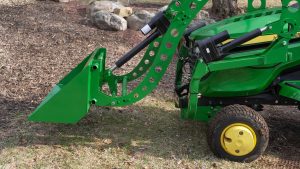
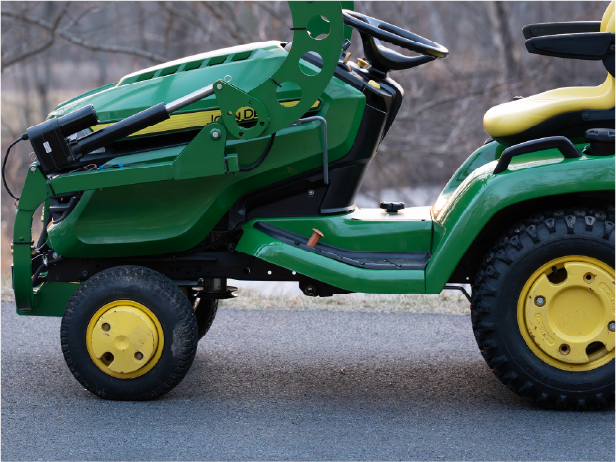
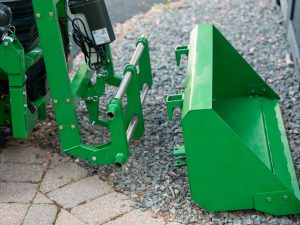
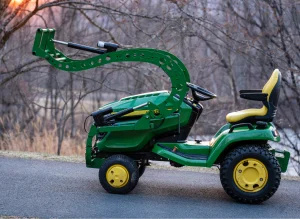
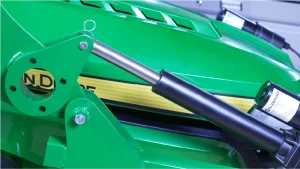
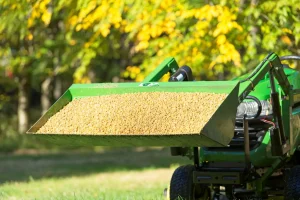
If you own a John Deere X300 or X500 and want to move mulch, gravel, or firewood without doing it by hand, see the LGM-100 front-end loader.

© 2026 All Rights Reserved | LGM USA LLC
Added to cart
Check out our shop to see what's available