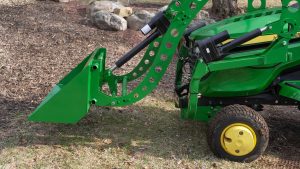


There is a familiar moment that every tractor owner experiences. It usually happens late in the evening while several browser tabs are open. You might be staring at a frame diagram that resembles your tractor, but not quite. You hold your credit card and hover over the purchase button, yet something feels uncertain. You begin to wonder whether the equipment you are about to order will actually fit. Owners of the John Deere X300 and X500 series understand this moment very well. These tractors are reliable, capable, and widely respected. They support lawn care, hauling, and light homesteading work across countless households. However, the variety within each series often creates confusion. The X300 has several variations, the X304 brings four-wheel steering, the X320 offers a larger deck, the X500 steps up in power, and the X590 adds electronic fuel injection. These differences matter the moment you start exploring front-end loader options.
When you reach the point where you are ready to upgrade your machine with a loader such as the LGM-100 from LGMUSA, the experience should feel exciting. You should look forward to moving a mulch pile in minutes instead of hours. You should never feel concerned about brackets, mounting differences, bumper styles, or compatibility questions that could complicate the installation. Our Pre-Purchase Consultation Service exists specifically to prevent that uncertainty. Instead of leaving you to hope your order is correct, our team walks through each detail with you. The service is simple, genuine, and personal. It is a conversation between tractor owners who understand the equipment and the expectations that come with it. There are no automated menus or scripted responses. There is only clear guidance to ensure that when the shipment arrives at your home, you feel confident and prepared.
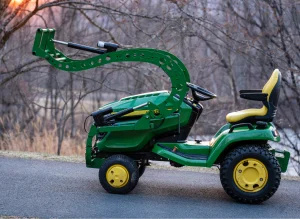
The aftermarket tractor world often promotes the idea of universal compatibility, yet the reality is far more nuanced. While the LGM-100 is engineered for a wide range of X300 and X500 tractors from 2007 to the present day, proper setup depends on more than just basic bolt alignment. Compatibility includes performance expectations, terrain considerations, weight distribution, optional equipment, electrical variations, and supporting accessories. During consultations, we take the time to explore all these details.
For example, the X300 lineup is popular and well-designed, yet the X304 introduces four-wheel steering. This feature affects tire clearance and movement under load. The X500 series is known for power and capability; however, an X500 from 2008 behaves differently than an X590 from 2024 due to engine differences, electrical updates, and frame variations. A standard online checkout form cannot capture these distinctions. Our team does. We confirm your exact year, model, tire setup, and the type of terrain you regularly operate on. We evaluate how the loader will behave on your property rather than relying on generic assumptions. Compatibility is more than a yes or no question. It is a performance-based assessment that ensures your loader functions as intended.
Control setup is one of the most important decisions tractor owners make. This choice affects how the loader feels during everyday use, how efficiently you can complete tasks, and how comfortable the operation becomes over time. We offer two options: a standard switch configuration and an upgraded joystick package. The difference between these systems is significant, and your ideal choice depends entirely on your workflow.
During consultations, we discuss how often you plan to use the loader, what type of material you plan to move, and how repetitive your tasks will be. For projects that involve consistent scooping and dumping, the joystick offers a smoother, more intuitive experience. It resembles the control style of larger construction equipment and allows simultaneous movement for greater efficiency. For users who operate the loader occasionally or want a cost-conscious setup, the standard switch system performs exceptionally well. We have guided many customers toward the switches after learning that their needs did not require the advanced control style.
Our priority is alignment between your expectations and the equipment you purchase. The goal is long-term satisfaction rather than unnecessary upgrades. A quick website selection cannot provide this level of understanding, which is why the consultation process matters so much.
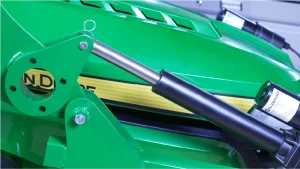
The LGM-100 operates using electric linear actuators instead of hydraulics. This engineering approach offers several benefits. Electric systems eliminate fluid leaks, minimize maintenance, and remove the need to tap into the tractor’s transmission or hydraulics. Most X300 and X500 owners appreciate these advantages, especially because they allow the loader to function independently without complicated modifications.
During consultations, we explain how the loader behaves so your expectations align with the actual experience. Electric lift arms operate with precision and hold position reliably without drift. The system is quiet and efficient. The loader draws power from the tractor’s 12-volt battery at a rate so modest that it rarely affects normal operation. We discuss lift times, battery health, and the workflow differences compared to a large skid steer or compact tractor. This conversation ensures that every new owner understands the rhythm of an electric loader and appreciates the consistency it provides.
Many customers reach us after struggling with equipment purchased elsewhere. The most common issues include:
These frustrations turn simple projects into long weekends filled with unexpected modifications. Our consultation service eliminates these surprises.
We examine your tractor’s entire setup, including brush guards, weather enclosures, rear attachments, and any additional accessories. Ballast is a particularly important topic. Front-end loaders add considerable weight to the nose of the tractor, and a balanced rear section is essential for stability and safety. Without ballast, a tractor becomes front-heavy, especially when lifting wet soil or dense snow. We walk you through your ballast options and ensure that your loader remains safe and stable under load. This level of detail ensures that your machine performs well from the moment you complete the installation.
John Deere owners often speak a unique technical language. Terms like K46 transmission, locking differential, frame reinforcement points, and Accel Deep deck carry meaning for those familiar with the brand. When you contact general online retailers, you might speak with someone unfamiliar with these details. That distinction matters.
Our team understands these machines inside and out. We know the strengths and limitations of each series. We understand how the X300’s lighter transaxle affects loader operation and how to use the equipment responsibly. We know how the X500’s capabilities enhance loader performance on uneven ground and how different tire options affect traction. These insights allow us to provide clear guidance. Our knowledge creates trust, and that trust shapes your overall experience.
In an age where customer interactions often feel distant or automated, our team takes pride in providing personal support. Our staff is based in the United States, understands seasonal conditions across different climates, and interacts with customers as partners rather than distant service providers. We frequently receive photos, measurements, and video calls from customers seeking verification of mounting points or clearance spaces. This level of engagement reflects our commitment to making sure every purchase is correct.
We approach each consultation as though we are assisting a neighbor who wants their equipment to perform well for years. This attitude defines our company culture and shapes the way we support every customer who contacts us.
A brief amount of preparation helps us guide you effectively. Before your call or email exchange, gather a few details:
These details give us a clear understanding of your tractor’s environment and your goals. The more we learn, the more precise our recommendations become.
There is a well-known philosophy among equipment owners that encourages choosing quality and durability the first time. The LGM-100 represents a meaningful investment in your property and your physical effort throughout the year. A consultation ensures that this investment works as designed. It prevents unnecessary returns, avoids compatibility issues, and eliminates guesswork.
Once your loader arrives, you should be able to mount the uprights, connect the wiring harness, secure the brackets, and begin working immediately. That moment should feel rewarding. Our guidance ensures that this happens consistently for every customer.
If you are ready to explore the LGM-100 or want clarity before placing your order, reach out to our team. You can contact us through our website, send an email, or call directly. We are always available, prepared, and ready to help you configure the ideal setup for your John Deere X300 or X500.
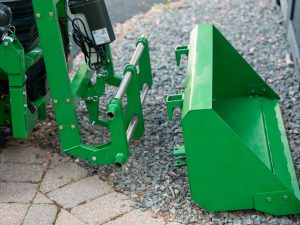
Compatibility starts with verifying that the mounting brackets are designed for the exact tractor frame. Model-specific kits ensure proper fit, stability, and prevent interference with steering components or axle movement.
Key steps include aligning upright supports correctly, tightening all bolts to manufacturer torque specifications, and routing electrical wiring safely away from heat sources and moving parts.
The system uses a simple 12V plug-and-play connection to the battery with sealed connectors and a proper ground, avoiding complex hydraulic or internal mechanical integration.
Testing full movement ensures the loader clears the hood, tires, and frame. This prevents damage and confirms smooth operation before handling heavy loads.
Regular inspection of bolts, pins, and mounting points helps prevent loosening from vibration. Keeping hardware tight ensures long-term safety and structural stability.


© 2026 All Rights Reserved | LGM USA LLC
Added to cart
Check out our shop to see what's available